| German Explorers and Painters of the Old West, and Other Stories |
They crossed Nebraska and journeyed into western Wyoming. Bierstadt and Lander separated, and
he stayed in the Wind River Mountains for three weeks to paint. Bierstadt's first Rocky Mountain
exhibition took place in March, 1860 and immediately established his reputation as a great landscape
painter. His paintings were enormous, vivid, and they romantically portrayed the West in a mystically
delirious way that simply enraptured people of the day. They offered a glimpse of total serenity in a
time of total confusion and pain.
he stayed in the Wind River Mountains for three weeks to paint. Bierstadt's first Rocky Mountain
exhibition took place in March, 1860 and immediately established his reputation as a great landscape
painter. His paintings were enormous, vivid, and they romantically portrayed the West in a mystically
delirious way that simply enraptured people of the day. They offered a glimpse of total serenity in a
time of total confusion and pain.
The 1859 expedition led by Lander was a surveying and an Indian peacekeeping mission (the
expedition included four wagons full of gifts worth 5,000 dollars for Shoshone tribesmen whose trade
would be disrupted by the new route), and it was also invested broadly in the arts. Lander rebuilt and
improved sections of the road in 1859, and a California correspondent called the Lander Trail the
"model emigrant route of America." 13,000 emigrants reportedly crossed the Lander Road in its first
season. Lander was later an esteemed war hero and also a writer and poet.
expedition included four wagons full of gifts worth 5,000 dollars for Shoshone tribesmen whose trade
would be disrupted by the new route), and it was also invested broadly in the arts. Lander rebuilt and
improved sections of the road in 1859, and a California correspondent called the Lander Trail the
"model emigrant route of America." 13,000 emigrants reportedly crossed the Lander Road in its first
season. Lander was later an esteemed war hero and also a writer and poet.
Artist Emanuel Leutze, 1816-1868, also went on the expedition. A German-born Philadelphian also
trained in Düsseldorf, he helped with the artists' preparations. Leutze, most famous for his painting of
Washington crossing the Delaware, and Bierstadt were already acquainted. A photographer was also
hired by Bierstadt as well as Artist Seth Frost and Henry Hitchings, skilled in lithography and
watercolor. Hitchings, Bierstadt and Frost ironically all later died within the same year as one another.
trained in Düsseldorf, he helped with the artists' preparations. Leutze, most famous for his painting of
Washington crossing the Delaware, and Bierstadt were already acquainted. A photographer was also
hired by Bierstadt as well as Artist Seth Frost and Henry Hitchings, skilled in lithography and
watercolor. Hitchings, Bierstadt and Frost ironically all later died within the same year as one another.
For Americans who had never seen the American West, Bierstadt’s paintings were awesome. Some
of his canvases were so large and detailed that viewers stood a distance from the painting and used
opera glasses to focus on small sections. By bringing attention to the grandeur of the West, Bierstadt
even influenced the establishment of California’s Yosemite National Park as a way to protect such
national treasures. His paintings were an enormous success and sold for unparalleled prices.
of his canvases were so large and detailed that viewers stood a distance from the painting and used
opera glasses to focus on small sections. By bringing attention to the grandeur of the West, Bierstadt
even influenced the establishment of California’s Yosemite National Park as a way to protect such
national treasures. His paintings were an enormous success and sold for unparalleled prices.
Bierstadt planned to travel west again immediately, but the beginning of the Civil War delayed his
next trip until 1863 and by then he also had to obtain permission to accompany an army unit because
of the danger of Indian attacks. He couldn't find an accommodating army unit, however, so in May
of 1863, he and Fitz Hugh Ludlow, writer and art critic at the New York Evening Post, set out for
California from St. Joseph, Missouri, from there to hopefully proceed to Canada. Bierstadt and
Ludlow thought they could mutually benefit and promote each other by their respective skills.
Ludlow is best-known for his autobiographical book The Hasheesh Eater, 1857, in which he explores
altered states of consciousness. Ludlow's descriptions of their trip were of great interest back in the
East. He describes a scene they witnessed in Nebraska:
next trip until 1863 and by then he also had to obtain permission to accompany an army unit because
of the danger of Indian attacks. He couldn't find an accommodating army unit, however, so in May
of 1863, he and Fitz Hugh Ludlow, writer and art critic at the New York Evening Post, set out for
California from St. Joseph, Missouri, from there to hopefully proceed to Canada. Bierstadt and
Ludlow thought they could mutually benefit and promote each other by their respective skills.
Ludlow is best-known for his autobiographical book The Hasheesh Eater, 1857, in which he explores
altered states of consciousness. Ludlow's descriptions of their trip were of great interest back in the
East. He describes a scene they witnessed in Nebraska:
"A very picturesque party of Germans going to Oregon... they had a large herd of cattle and fifty
wagons, mostly drawn by oxen, though some of the more prosperous "outfits" were attached to
horses or mules. The people themselves represented the better class of Prussian or North German
peasantry. A number of strapping teamsters,in gay costumes, appeared like Westphalians. Some of
them wore canary shirts and blue pantaloons; with these were intermingled blouses of claret, rich
warm brown, and the most vivid red. All the women and children had some positive color about
them, if it only amounted to a knot of ribbons, or the glimpse of a petticoat. I never saw so many
bright and comely faces.... The whole picture of the train was such a delight in form, color, and spirit
that I could have lingered near it all the way to Kearney."
wagons, mostly drawn by oxen, though some of the more prosperous "outfits" were attached to
horses or mules. The people themselves represented the better class of Prussian or North German
peasantry. A number of strapping teamsters,in gay costumes, appeared like Westphalians. Some of
them wore canary shirts and blue pantaloons; with these were intermingled blouses of claret, rich
warm brown, and the most vivid red. All the women and children had some positive color about
them, if it only amounted to a knot of ribbons, or the glimpse of a petticoat. I never saw so many
bright and comely faces.... The whole picture of the train was such a delight in form, color, and spirit
that I could have lingered near it all the way to Kearney."
Bierstadt was very successful for the next decade, and he made two additional western journeys, first
in 1863. Meanwhile, by late in 1864, Ludlow’s marriage had fallen apart apparently from mutual
infidelity and Ludlow's struggles with opium addiction. He and his wife Rosalie obtained a divorce in
May of 1866 and she ended up marrying Beirstadt a few months later. The next trip for Bierstadt
was from 1871 to 1873. In this latter trip, Bierstadt traveled north and south from San Francisco and
opened an art studio in San Francisco.
in 1863. Meanwhile, by late in 1864, Ludlow’s marriage had fallen apart apparently from mutual
infidelity and Ludlow's struggles with opium addiction. He and his wife Rosalie obtained a divorce in
May of 1866 and she ended up marrying Beirstadt a few months later. The next trip for Bierstadt
was from 1871 to 1873. In this latter trip, Bierstadt traveled north and south from San Francisco and
opened an art studio in San Francisco.
There he met the noted photographer Edward Muybridge. Together, Muybridge photographed and
Bierstadt sketched the native American culture they encountered. The Indians they met gathered in
small, self contained political units which would later be referred to as "tribelets" by anthropologists.
Soon, in 1869, the trans-continental railroad was completed, and made the emigrant wagon and other
aspects of the great, mysterious West a part of history.
Bierstadt sketched the native American culture they encountered. The Indians they met gathered in
small, self contained political units which would later be referred to as "tribelets" by anthropologists.
Soon, in 1869, the trans-continental railroad was completed, and made the emigrant wagon and other
aspects of the great, mysterious West a part of history.
From the start, Bierstadt was very successful financially. After Colonel Lander died in the Civil War,
Bierstadt named one of his famous paintings "The Rocky Mountains, Lander's Peak". The painting
sold for $25,000 in 1865, a very hefty sum then. Later, it is said he bought it back and gave it to his
brother. Bierstadt was well received both at home and abroad, where he maintained various studios.
Bierstadt named one of his famous paintings "The Rocky Mountains, Lander's Peak". The painting
sold for $25,000 in 1865, a very hefty sum then. Later, it is said he bought it back and gave it to his
brother. Bierstadt was well received both at home and abroad, where he maintained various studios.
For the next decade his spectacular pictures of Western scenery, with the fantastic play of light and
color, continued to enthrall people. He built a magnificent mansion overlooking the Hudson river and
named it Malkasten. He and his wife toured Europe, mingled with the elite and even met with Queen
Victoria. His wife Rosalie needed to live in a warm climate for health reasons and stayed in Nassau,
where her husband also began to paint the tropics. Bierstadt was well respected and especially
generous with various charities. By 1880, his reputation in the art world substantially declined as the
novelty of the Western theme of his paintings waned. Malkasten burned down in 1882 and his wife
died in 1893. Bierstadt, the son of a Solingen barrel maker, died rich and suddenly in 1902.
color, continued to enthrall people. He built a magnificent mansion overlooking the Hudson river and
named it Malkasten. He and his wife toured Europe, mingled with the elite and even met with Queen
Victoria. His wife Rosalie needed to live in a warm climate for health reasons and stayed in Nassau,
where her husband also began to paint the tropics. Bierstadt was well respected and especially
generous with various charities. By 1880, his reputation in the art world substantially declined as the
novelty of the Western theme of his paintings waned. Malkasten burned down in 1882 and his wife
died in 1893. Bierstadt, the son of a Solingen barrel maker, died rich and suddenly in 1902.
| Other Figures of the Alt West |
William Hahn also studied in Dusseldorf. He moved to Boston in 1869 and in 1872 to San Francisco
where he set up a studio and became a painter of animal, interior, still life, and genre scenes including
Chinatown. He was Director of the San Francisco Art Association in 1876. He sketched from San
Francisco to Yosemite, the Sierra Nevadas, Alaska, and So. California. Germans were intrigued with
the great mountains and Indians of the West..
where he set up a studio and became a painter of animal, interior, still life, and genre scenes including
Chinatown. He was Director of the San Francisco Art Association in 1876. He sketched from San
Francisco to Yosemite, the Sierra Nevadas, Alaska, and So. California. Germans were intrigued with
the great mountains and Indians of the West..
Johann Georg Kohl, 1808-1878, was commissioned by congress to duplicate his drawings for a
catalog of early American maps in 1856. Between 1855 and 1857, he completed a landmark study of
the history of the North American coastline, showing hydrographic and orthographic descriptions,
route charts and accounts of expeditions and maps. Kohl's drawings were the most comprehensive
collection of cartographic reproductions in America at that time.
catalog of early American maps in 1856. Between 1855 and 1857, he completed a landmark study of
the history of the North American coastline, showing hydrographic and orthographic descriptions,
route charts and accounts of expeditions and maps. Kohl's drawings were the most comprehensive
collection of cartographic reproductions in America at that time.
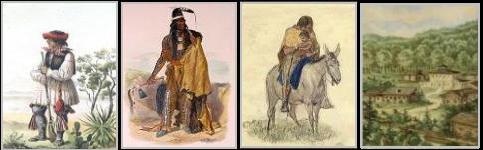
Arthur Schott was a German-born scientist, artist and musician who was appointed as a "special
scientific collector," to gather botanical, geological, and zoological data and make notes and drawings
of the land of the remote Southeastern regions and its flora and fauna. His images Indian tribes,
including Seminole, Lipan Apache, Yumas, and Kiowa, were valuable contributions.
scientific collector," to gather botanical, geological, and zoological data and make notes and drawings
of the land of the remote Southeastern regions and its flora and fauna. His images Indian tribes,
including Seminole, Lipan Apache, Yumas, and Kiowa, were valuable contributions.
He tackled Indians, the plains, Utah, Mormons, gold, California, the Santa Fe Trail, the Civil War,
the South, and the Great Lakes. He was sometimes called "the German (James F.) Cooper". Duke
Paul Wilhelm of Württemberg, Frederick Wislizenus, Rudolph Kurz, Friederich Gerstäcker, Julius
Fröbel, Friedrich Strubberg, Capitain B. Schmölder and George Engelmann were others who
contributeds to the early exploration, natural history and literature of the USA.
the South, and the Great Lakes. He was sometimes called "the German (James F.) Cooper". Duke
Paul Wilhelm of Württemberg, Frederick Wislizenus, Rudolph Kurz, Friederich Gerstäcker, Julius
Fröbel, Friedrich Strubberg, Capitain B. Schmölder and George Engelmann were others who
contributeds to the early exploration, natural history and literature of the USA.
Friedrich Richard Petri, 1824-1857, was a painter from Dresden who spent 11 years at the Academy
of Fine Arts where he met artist Hermann Lungkwitz. Petri and Lungkwitz immigrated with their
families to the hill country of Texas in 1851. His Indian work documents the native people precisely,
with no stereotypical "savages." His paintings contribute pictorial evidence of the overall friendly
relationship between most German settlers and Indians. Petri accidentally drowned in 1857. Lungwitz
became a well-known landscape painter.
of Fine Arts where he met artist Hermann Lungkwitz. Petri and Lungkwitz immigrated with their
families to the hill country of Texas in 1851. His Indian work documents the native people precisely,
with no stereotypical "savages." His paintings contribute pictorial evidence of the overall friendly
relationship between most German settlers and Indians. Petri accidentally drowned in 1857. Lungwitz
became a well-known landscape painter.
This expedition was a great opportunity. On his return from the West to New Bedford with his
magnificent representations of the American West, he became the city's most prominent artist.
Bierstadt brought the West alive to people all over the world. All along the way in the Landler
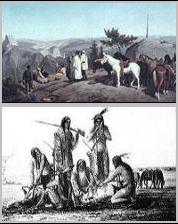
expedition, Bierstadt sketched Indians, pioneers and the majestic mountains.
magnificent representations of the American West, he became the city's most prominent artist.
Bierstadt brought the West alive to people all over the world. All along the way in the Landler
expedition, Bierstadt sketched Indians, pioneers and the majestic mountains.
Franz Hölzlhuber, 1826-1898, was a curious Austrian who visited the U.S. from 1856 to 1860,
sketching his observations as he travelled. He spent a lot of time in Wisconsin, the Mississippi River
Valley and Canada. After his return home to Austria, he used his sketches for larger drawings. He
supposedly introduced America to the joys of the Linzertorte after he lost his luggage during one
point in his journey and had to temporarily work as a baker. After he returned to Vienna, he headed
the Austrian railway's museum and library.
sketching his observations as he travelled. He spent a lot of time in Wisconsin, the Mississippi River
Valley and Canada. After his return home to Austria, he used his sketches for larger drawings. He
supposedly introduced America to the joys of the Linzertorte after he lost his luggage during one
point in his journey and had to temporarily work as a baker. After he returned to Vienna, he headed
the Austrian railway's museum and library.
There was H.B. Möllhausen, who not only wrote over 45 extensive personal narratives describing his
exploring trips in the West, he made many sketches. Some of his novels were in multiple volumes.
exploring trips in the West, he made many sketches. Some of his novels were in multiple volumes.
When Colonel Frederick W. Lander was hired by the Interior Department in 1859 to survey a new
wagon route north of Salt Lake to California, he took landscape painter Albert Bierstadt along.
Bierstadt was enthusiastic at the prospect of painting the western mountains and Indians. As a child,
Bierstadt had moved with his family from Solingen Germany to New Bedford, Massachusetts. As an
adult, Bierstadt returned to Germany to study painting in Düsseldorf from 1853 to 1857.
wagon route north of Salt Lake to California, he took landscape painter Albert Bierstadt along.
Bierstadt was enthusiastic at the prospect of painting the western mountains and Indians. As a child,
Bierstadt had moved with his family from Solingen Germany to New Bedford, Massachusetts. As an
adult, Bierstadt returned to Germany to study painting in Düsseldorf from 1853 to 1857.
The work of Hahn, Möllhausen, Schott, Bodmer, Petri and Hölzlhuber
The Bavarian emigrant Christian Barthelmess, 1854-1906, photographed the life of the Cheyenne
Indians around 1880.
Indians around 1880.
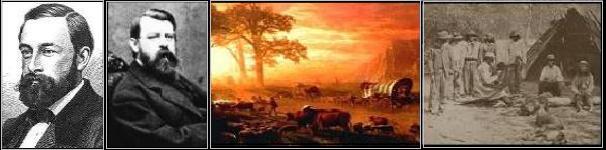
| Bierstadt and Emanuel Leutze; the West; sketching the Paiutes |