| From Chapter XXVI: HYPOCRITICAL INDIGNATION Gas warfare and submarine warfare offered instances of violent outbursts of indignation on the on the part of the Press, which events showed were gross hypocrisy. This is an attitude rather than an expression of falsehood. "We must expect the Germans to fight like savages who have acquired a knowledge of chemistry." (Daily Express," April 27, 1915.) "This atrocious method of warfare . . . this diabolical contrivance. . . . The wilful and systematic attempt to choke and poison our soldiers can have but one effect upon the British peoples and upon all the non-German peoples of the earth. It will deepen our indignation and our resolution, and it will fill all races with a horror of the German name". ("The Times," April 29, 1915). But it turned out that the Germans had not been the first to use poison gas. M. Turpin"s discoveries in poison explosives had been advertised in the French Press before this date, and the French War Ministry's official instructions with regard to the use of gas hand grenades had been issued in the autumn of 1914. In May 1915 Colonel Maude wrote in 'Land and Water': "All shells, all fires, all mining charges, give out asphyxiating gases, and from some shells the fumes are poisonous. The uses of these has been discussed for years, because the explosive that liberates the deadly gas is said to possess a quite unusual power; but the reason why many of these types were not adopted was because they were considered too dangerous for our gunners to transport and handle, not that when they burst they would have poisoned the enemy. At this time this quality of deadliness was defended on the ground of humanity, as the death inflicted would be absolutely certain and painless, and hence there would be no wounded. In any case, at the beginning of this war it was stated in all the French papers that the difficulty of handling these shells had been overcome, and that they had been employed on certain sectors of the French front with admirable results. When the time comes to defend their use, shall we really have the effrontery to claim for our shells that they poison but do not asphyxiate? Moreover, is not poisoning also covered by the Hague Convention? In spirit it undoubtedly is; but as I have not the text at hand to refer to, it may possibly leave a loophole on this question, through which our international lawyers might escape." Subsequently, of course, we adopted gas warfare and perfected it. MR. BILLING: Is it not a fact . . . that we have a better gas and a better protection and that now the Huns are squealing? MR. BONAR LAW: I wish I were as sure of that as the Honourable Member. House of Commons, February 25, 1918. Their (the British and French) gas masks to-day are more efficient than the German; their gas is better and is better used. Daily Mail," February 15, 1918) The Allies vied with one another in the production of poison gas, and the following article, by Mr. Ed. Berwick, an American, shows the extent to which it had reached before the end. "There were sixty-three different kinds of poison gas used before the war ended, and in November 1918 our chemical warfare service (established in June of that year) was engaged in sixty-five "major research problems," including eight gases more deadly than any used up to that date. . . . One kind rendered the soil barren for seven years, and a few drops on a tree-trunk causes it to "wither in an hour. Our arsenal at Edgewood, Maryland, and its tributaries was turning out 810 tons weekly against 385 tons by France, 410 tons Britain, and only 210 Germany. "It was almost ready to increase its output to 3,000 tons a week. . . . Congress had appropriated 100,000,000 dollars for this chemical warfare service and allotted 48,000 men for its use. The armistice rendered needless both allotment and appropriation in such magnitude". (Foreign Affairs, July 1922.) Poison gas of incredible malignity, against which only a secret mask (which the Germans could not obtain in time) was proof, would have stifled all resistance and paralysed all life on the hostile front subject to attack. ("What War in 1919 Would Have Meant," by Mr. Winston Churchill, "Nash's Pall Mall Magazine" September 1924). Since the war, research and experiments have continued, and Great Britain is now said to lead the way in this "atrocious method of warfare, "this diabolical contrivance," the weapon of "savages." |
| Excerpts from: FALSEHOOD IN WAR-TIME by Arthur Ponsonby |
| The French were the first to use chemical weapons during the First World War, using tear gas. However, the first full- scale deployment of chemical warfare agents was during the Second Battle of Ypres, April 22, 1915. A total 50,965 tons of pulmonary, lachrymatory, and vesicant agents were deployed by both sides of the conflict, including chlorine, phosgene and mustard gas. |
| The German use of poison gas had its beginnings in a Jewish (German) man named Fritz Haber who began experimenting with the lethal capabilities of chlorine in his Berlin institute and created the first weapon of mass destruction. Once he talked the reluctant German military into listening to him, he was given rank and formed his own gas corps. Once the weapon was unleashed, its results were horrifying. He maneuvered transportation to the Eastern Front the very next day to personally oversee the next gas attack against the Russians. In July of 1917, the Haber institute introduced a new product: mustard gas, probably the most inhumane weapon of the war. |
| Poison Gas |
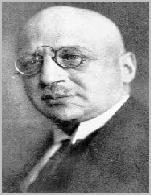
| Soon, the Brits were using gas on a regular basis as well. Haber's hideous inventions ended up being used by both sides, killing over one hundred thousand men and maiming over a million others. For his "creativity", Haber was awarded the Nobel prize for his work on nitrates after the war, which enabled him to further pursue his research into gas weapons. While pretending to develop pesticides in the 1920s, he developed another toxic gas from hydro-cyanic acid, one powerful enough to kill insects. It was called "Zyklon B". Unimpressed by his "genius", Haber, above, was later forced to flee from Germany and died in Switzerland in 1934. |