| More on Loehe |
Wilhelm Loehe was born on February 8, 1808 in Fürth to middle-class businessman Johann Loehe
and Maria Barbara, the daughter of Mayor Walthelm of Fürth. Wilhelm was eight years old when his
father died, leaving behind seven children. Their mother took over the family business. She was a
devout, loving woman with a pietistic bent who encouraged him to study theology, and he attended
the Latin school in Fürth and then the Melanchthon School in Nürnberg. After graduation he studied
theology and completed his studies in Erlangen. A serious student, Loehe might have quickly climbed
the ladder of success had he conformed to the religious trends of the day, but he was a man of strong
personal conviction.
In 1830, Loehe performed very well on his exams, but his trial sermon which was based entirely
upon the Lutheran doctrine of justification was considered "too mystical" by the rationalistic
examiner, and this branded him early on as a "mystic and pietist" which was not good for his future
career. Loehe was ordained to the pastoral office on July 25, 1831 in the St. Gumbertus Church in
Ansbach. He was then required to finish a five-year vicariat, during which time he was sent to twelve
separate locations.
During the year he spent in Nürnberg, his sermons soon became renowned. After his employment
exams, he wished for a job in Erlangen or Nürnberg but the ecclesial authorities did not want him
having an influential city parish and instead shuffled him off to a country parish in remote
Neuendettelsau. He and his bride Helen Andreae made this their home and soon had four children,
three sons and one daughter. After Helen, eleven years his junior, died after a brief illness at the age
of 24 in 1843, Loehe never remarried. Their youngest son died a year after his mother, and Loehe
raised and educated the remaining three children on his own. In 1845, he published three books
about the Church. His collected works that have appeared in print would grow to seven volumes
printed as twelve books.
By then he had already started educating preachers for the German emigrants in North America.
Shoemaker Adam Ernst and weaver Georg Burger told him that they wanted to go to America and
preach. Loehe housed them in Neuendettelsau and undertook their education as chaplains and
teachers, and by July of 1842 they were ready to go. This was the beginning of Loehe's "Mission
Preparation Institute" which Friedrich Bauer later took over and turned it into the "Mission Institute".
Loehe and his friends started the "Society for Inner Mission in the Sense of the Lutheran Church" in
1849 to finance their ventures. Loehe published a spiritual guide book for use both at home in
Germany and in America.
Many Lutheran pastors in Bavaria obliged the Reformed Christians belonging to the Lutheran Church
who wanted to receive the sacrament according to the Reformed ritual, even allowing the taking of
Holy Communion. The Landeskirche saw no difficulty with this, but Loehe did, and he strongly
opposed table fellowship between the two confessions. This caused controversy and the
Landeskirche board filed charges against the "Loehe circle", hoping for their removal from office.
However, it was ironed out and Loehe and his friends stayed.
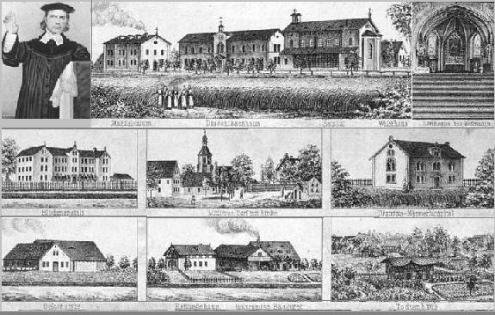
Loehe's other big social project was the founding of the Deaconess Institute in Neuendettelsau in
1854. He was hoping that unmarried women in the countryside would find employment in caring for
the sick, the handicapped and the needy in rural areas. To this end, he founded the "Lutheran
Association for the Female Diaconate" in Neuendettelsau in 1853 which contained a Motherhouse
with its various schools and medical facilities. Many deaconesses were also employed in the care of
the wounded during war. Loehe died after a stroke on January 2, 1872. Written on his gravestone in
the Neuendettelsau cemetery are the words "I believe in the communion of saints."
Aside from the Frankonian colonies in Michigan which Loehe founded, Loehe missionaries also
found their way to the great American West and began work among the Cheyenne at Deer Creek,
Wyoming. As of 1861, they held church services for the Indians and baptized three orphaned boys.
But in September, 1864 they had to move back to the Fort Laramie because of hostile Indians, and
this ended the Neuendettelsau Mission Indians.
Loehe is noted in Germany as for influencing the foundation of free Lutheran Churches in Nassau,
Prussia, Austria, Bohemia, Hungary, and France. He arranged for several deaconesses to work
abroad, not only in North America but also in Russia, Estonia, and Bessarabia. In Germany, the
name Wilhelm Loehe is connected mainly with the second-largest social institution in the whole
country, the Diakonie in Neuendettelsau. The Diakonie started with 60 female students who lived
and worked with the handicapped, sick and elderly. When Loehe died, eight more houses had sprung
up next to the parent branch. On January 2,1945, Allied bombs heavily damaged the hospital portion
of the mission house. Today the institution serve as hospitals, old peoples’ homes, schools, homes
for the handicapped and workshops. 1,500 people work here in Neuendettelsau and 5,200 more in
branches all over Bavaria. This makes it one of the biggest independent diocese in Germany.
and Maria Barbara, the daughter of Mayor Walthelm of Fürth. Wilhelm was eight years old when his
father died, leaving behind seven children. Their mother took over the family business. She was a
devout, loving woman with a pietistic bent who encouraged him to study theology, and he attended
the Latin school in Fürth and then the Melanchthon School in Nürnberg. After graduation he studied
theology and completed his studies in Erlangen. A serious student, Loehe might have quickly climbed
the ladder of success had he conformed to the religious trends of the day, but he was a man of strong
personal conviction.
In 1830, Loehe performed very well on his exams, but his trial sermon which was based entirely
upon the Lutheran doctrine of justification was considered "too mystical" by the rationalistic
examiner, and this branded him early on as a "mystic and pietist" which was not good for his future
career. Loehe was ordained to the pastoral office on July 25, 1831 in the St. Gumbertus Church in
Ansbach. He was then required to finish a five-year vicariat, during which time he was sent to twelve
separate locations.
During the year he spent in Nürnberg, his sermons soon became renowned. After his employment
exams, he wished for a job in Erlangen or Nürnberg but the ecclesial authorities did not want him
having an influential city parish and instead shuffled him off to a country parish in remote
Neuendettelsau. He and his bride Helen Andreae made this their home and soon had four children,
three sons and one daughter. After Helen, eleven years his junior, died after a brief illness at the age
of 24 in 1843, Loehe never remarried. Their youngest son died a year after his mother, and Loehe
raised and educated the remaining three children on his own. In 1845, he published three books
about the Church. His collected works that have appeared in print would grow to seven volumes
printed as twelve books.
By then he had already started educating preachers for the German emigrants in North America.
Shoemaker Adam Ernst and weaver Georg Burger told him that they wanted to go to America and
preach. Loehe housed them in Neuendettelsau and undertook their education as chaplains and
teachers, and by July of 1842 they were ready to go. This was the beginning of Loehe's "Mission
Preparation Institute" which Friedrich Bauer later took over and turned it into the "Mission Institute".
Loehe and his friends started the "Society for Inner Mission in the Sense of the Lutheran Church" in
1849 to finance their ventures. Loehe published a spiritual guide book for use both at home in
Germany and in America.
Many Lutheran pastors in Bavaria obliged the Reformed Christians belonging to the Lutheran Church
who wanted to receive the sacrament according to the Reformed ritual, even allowing the taking of
Holy Communion. The Landeskirche saw no difficulty with this, but Loehe did, and he strongly
opposed table fellowship between the two confessions. This caused controversy and the
Landeskirche board filed charges against the "Loehe circle", hoping for their removal from office.
However, it was ironed out and Loehe and his friends stayed.
Loehe's other big social project was the founding of the Deaconess Institute in Neuendettelsau in
1854. He was hoping that unmarried women in the countryside would find employment in caring for
the sick, the handicapped and the needy in rural areas. To this end, he founded the "Lutheran
Association for the Female Diaconate" in Neuendettelsau in 1853 which contained a Motherhouse
with its various schools and medical facilities. Many deaconesses were also employed in the care of
the wounded during war. Loehe died after a stroke on January 2, 1872. Written on his gravestone in
the Neuendettelsau cemetery are the words "I believe in the communion of saints."
Aside from the Frankonian colonies in Michigan which Loehe founded, Loehe missionaries also
found their way to the great American West and began work among the Cheyenne at Deer Creek,
Wyoming. As of 1861, they held church services for the Indians and baptized three orphaned boys.
But in September, 1864 they had to move back to the Fort Laramie because of hostile Indians, and
this ended the Neuendettelsau Mission Indians.
Loehe is noted in Germany as for influencing the foundation of free Lutheran Churches in Nassau,
Prussia, Austria, Bohemia, Hungary, and France. He arranged for several deaconesses to work
abroad, not only in North America but also in Russia, Estonia, and Bessarabia. In Germany, the
name Wilhelm Loehe is connected mainly with the second-largest social institution in the whole
country, the Diakonie in Neuendettelsau. The Diakonie started with 60 female students who lived
and worked with the handicapped, sick and elderly. When Loehe died, eight more houses had sprung
up next to the parent branch. On January 2,1945, Allied bombs heavily damaged the hospital portion
of the mission house. Today the institution serve as hospitals, old peoples’ homes, schools, homes
for the handicapped and workshops. 1,500 people work here in Neuendettelsau and 5,200 more in
branches all over Bavaria. This makes it one of the biggest independent diocese in Germany.
Individuals sent by Loehe were instrumental in founding the Ohio Synod. Loehe had provided
money, books, and other students for this seminary, among them August Craemer, but there was
controversy from the start regarding the issue of "American Lutheranism", a movement associated
with Samuel S. Schmucker, the most well-known spokesman for the General Synod organized in
1820 which aimed to develop Lutheran identity within principles held in common with other
Protestants, principles which tended to shed elements seen as archaic or remnants of Catholicism
carried over from the times of the Reformation. This form of "American Lutheranism" was
influential in the first half of the nineteenth century.
By contrast, Loehe was keenly interested in old Lutheran liturgies. He focused his theological studies
on the Lutheran Confessions and put considerable thought into the celebration of Holy Communion
as the center of congregational life. Loehe also had a belief in a kind of "divine right" of preachers.
He saw the "American Lutheranism" movement more or less as mob rule, an American version of
the Prussian Union where various Lutheran denominations were forced to water down their
theological beliefs and blend together to avoid dissension in the ranks. Also, Loehe rejected of the
use of English among German Americans because he felt it left open the door for misinterpretation.
The conflict between "Old Lutherans" and "American Lutherans" was illustrated in controversy of
the Ohio Synod in the distribution formula in the Lord's Supper, the Old Lutherans insisting upon the
removal of the words "Christ said" or "Christus spricht" from the liturgy because this formula was
used in the Prussian Union as a way of providing for either a Lutheran or Reformed interpretation.
The Reformed could use this formula to mean that while Jesus said "This is my body," it did not
necessarily mean that the consecrated bread is the very body of the Lord. The Ohio Synod stuck to
their guns in a 1845 convention and refused to use the traditional Lutheran distribution formula "This
is my body / This is my blood." Loehe took their act as deliberate ambiguity and compromise of
doctrine and withdrew his support from the Synod in 1845. The break with Ohio paralleled the
movement of Loehe's Saginaw Valley colonies away from the Michigan Synod, a result of hard
feelings and dissatisfaction which had been building for years.
Of the twenty-two men who drew up the declaration of separation from the Ohio Synod in 1845,
eleven had been sent to America by Loehe. The document stated their objections, including the
toleration of some Reformed congregations as members. Their conference laid the foundation for a
new body completely loyal to the Lutheran Confessions including Loehe's men and other pastors
who had left the Ohio Synod, notably Prussian emigrants in Wisconsin and those in New York under
the leadership of Buffalo's Johannes Grabau as well as the Saxons from Missouri.
Loehe’s emissaries founded the Missouri Synod in 1845 and half of its ministerium was comprised
by Loehe's followers. A group of Saxon Lutherans led by Pastor Martin Stephan had also come to
America to believe and practice the old Lutheran faith. This group came to Missouri, led to their new
home by a young pastor named C. F. W. Walther who became the first president of the Missouri
Synod. Loehe turned to the Missouri Synod as a mission partner more in line with his own
confessional commitments after the rift with the Ohio Synod and its seminary in Columbus, Ohio.
However, tensions would develop here, too. In 1847, Loehe rejected the entire concept of Voters’
Assemblies and congregational rule. He was unhappy with the Missouri Synod's constitution and felt
that congregational suffrage was nonapostolic. "One thing is regrettable," he said to a colleague in
1847, "when our good people arrive over there and breathe the American air, they become imbued
with democracy and one hears with amazement how independent and congregational they think
about church organization. They are in danger of forgetting the high, divine honor of their office and
becoming slaves to their congregations." Loehe at one point even rebuked the Missourians for their
"papistical territorialism." Loehe feared that Walther and the other Saxons placed too much power
into the hands of the congregation.
Loehe and Walther split, and in August, 1853, Loehe broke relations with the Missouri Synod. There
would still be occasional contact between the Missourians and their former mentor, however, and
Loehe's former pupils were not ungrateful to him. Verbally violent conflict had emerged over the
nature of ordained ministry between the Missouri Synod and the founder of the Buffalo Synod,
Johannes Grabau, who defended Loehe's position. When Loehe attempted to mediate this
continually escalating dispute, he earned him the wrath of both groups. Pointing out what he believed
to be errors in the approaches of both Grabau and Walther, Loehe urged each of the parties to
something of a truce, leaving the disputed issues as "open questions" until they could be resolved in
an amicable manner and in such a way achieve reconciliation. The whole bitter affair left an
unpleasant chapter in church history.
In addition to the four colonies in Saginaw which Loehe founded, he had established a seminary
there in 1852 under direction of Georg Grossmann. That and the last of the Loehe Michigan
colonies, Frankenhilf, under the care of pastor Johannes Deindoerfer, were not handed over right
away to the Missouri Synod as they were under the leadership of pastors who remained sympathetic
to Loehe's position on church and ministry. The pastors found themselves accused of doctrinal error
by the leaders of the Missouri Synod, leading them to seek out a territory not yet under development
by the Missouri Synod. They relocated to Iowa in 1853. Loehe would continue to send men there,
although the Iowa Synod would develop largely independent of his direct influence.
The Iowa Synod was itself founded at St. Sebald in Clayton County on August 24, 1854, with four
charter members: Deindoerfer, Grossmann, Fritschel, and a theological candidate, M. Schueller.
Their mission was to help German- speaking immigrants and maintain outreach to Native Americans.
The teachers' seminary founded in Iowa soon also became a theological seminary, Wartburg
Seminary in Iowa, which formally received its name in 1857. This led to the founding of Wartburg
College, which was moved several times to accommodate the shifting tide of Lutheran immigration,
then permanently located in Waverly, Iowa in 1935. The name Wartburg was given to the college
when it was located in rural St. Sebald because the wooded countryside of the area reminded its
founders of the Thuringian Forest where Wartburg Castle is located.
* Wartburg College offers a bachelor program in German Language and Literature that focuses on
the German language and related dialects as used in Austria, Germany, Switzerland, neighboring
European countries containing German-speaking minorities, and elsewhere. It includes instruction in
German philology; Old, Middle, and High German, Plattdeutsch and other regional dialects, and
applications to business, science/technology, and other settings. The Neuendettelsau Mission in New
Guinea (even at a time during World War I when German missionary work was being curtailed) has
had a long association with the Iowa Synod.
money, books, and other students for this seminary, among them August Craemer, but there was
controversy from the start regarding the issue of "American Lutheranism", a movement associated
with Samuel S. Schmucker, the most well-known spokesman for the General Synod organized in
1820 which aimed to develop Lutheran identity within principles held in common with other
Protestants, principles which tended to shed elements seen as archaic or remnants of Catholicism
carried over from the times of the Reformation. This form of "American Lutheranism" was
influential in the first half of the nineteenth century.
By contrast, Loehe was keenly interested in old Lutheran liturgies. He focused his theological studies
on the Lutheran Confessions and put considerable thought into the celebration of Holy Communion
as the center of congregational life. Loehe also had a belief in a kind of "divine right" of preachers.
He saw the "American Lutheranism" movement more or less as mob rule, an American version of
the Prussian Union where various Lutheran denominations were forced to water down their
theological beliefs and blend together to avoid dissension in the ranks. Also, Loehe rejected of the
use of English among German Americans because he felt it left open the door for misinterpretation.
The conflict between "Old Lutherans" and "American Lutherans" was illustrated in controversy of
the Ohio Synod in the distribution formula in the Lord's Supper, the Old Lutherans insisting upon the
removal of the words "Christ said" or "Christus spricht" from the liturgy because this formula was
used in the Prussian Union as a way of providing for either a Lutheran or Reformed interpretation.
The Reformed could use this formula to mean that while Jesus said "This is my body," it did not
necessarily mean that the consecrated bread is the very body of the Lord. The Ohio Synod stuck to
their guns in a 1845 convention and refused to use the traditional Lutheran distribution formula "This
is my body / This is my blood." Loehe took their act as deliberate ambiguity and compromise of
doctrine and withdrew his support from the Synod in 1845. The break with Ohio paralleled the
movement of Loehe's Saginaw Valley colonies away from the Michigan Synod, a result of hard
feelings and dissatisfaction which had been building for years.
Of the twenty-two men who drew up the declaration of separation from the Ohio Synod in 1845,
eleven had been sent to America by Loehe. The document stated their objections, including the
toleration of some Reformed congregations as members. Their conference laid the foundation for a
new body completely loyal to the Lutheran Confessions including Loehe's men and other pastors
who had left the Ohio Synod, notably Prussian emigrants in Wisconsin and those in New York under
the leadership of Buffalo's Johannes Grabau as well as the Saxons from Missouri.
Loehe’s emissaries founded the Missouri Synod in 1845 and half of its ministerium was comprised
by Loehe's followers. A group of Saxon Lutherans led by Pastor Martin Stephan had also come to
America to believe and practice the old Lutheran faith. This group came to Missouri, led to their new
home by a young pastor named C. F. W. Walther who became the first president of the Missouri
Synod. Loehe turned to the Missouri Synod as a mission partner more in line with his own
confessional commitments after the rift with the Ohio Synod and its seminary in Columbus, Ohio.
However, tensions would develop here, too. In 1847, Loehe rejected the entire concept of Voters’
Assemblies and congregational rule. He was unhappy with the Missouri Synod's constitution and felt
that congregational suffrage was nonapostolic. "One thing is regrettable," he said to a colleague in
1847, "when our good people arrive over there and breathe the American air, they become imbued
with democracy and one hears with amazement how independent and congregational they think
about church organization. They are in danger of forgetting the high, divine honor of their office and
becoming slaves to their congregations." Loehe at one point even rebuked the Missourians for their
"papistical territorialism." Loehe feared that Walther and the other Saxons placed too much power
into the hands of the congregation.
Loehe and Walther split, and in August, 1853, Loehe broke relations with the Missouri Synod. There
would still be occasional contact between the Missourians and their former mentor, however, and
Loehe's former pupils were not ungrateful to him. Verbally violent conflict had emerged over the
nature of ordained ministry between the Missouri Synod and the founder of the Buffalo Synod,
Johannes Grabau, who defended Loehe's position. When Loehe attempted to mediate this
continually escalating dispute, he earned him the wrath of both groups. Pointing out what he believed
to be errors in the approaches of both Grabau and Walther, Loehe urged each of the parties to
something of a truce, leaving the disputed issues as "open questions" until they could be resolved in
an amicable manner and in such a way achieve reconciliation. The whole bitter affair left an
unpleasant chapter in church history.
In addition to the four colonies in Saginaw which Loehe founded, he had established a seminary
there in 1852 under direction of Georg Grossmann. That and the last of the Loehe Michigan
colonies, Frankenhilf, under the care of pastor Johannes Deindoerfer, were not handed over right
away to the Missouri Synod as they were under the leadership of pastors who remained sympathetic
to Loehe's position on church and ministry. The pastors found themselves accused of doctrinal error
by the leaders of the Missouri Synod, leading them to seek out a territory not yet under development
by the Missouri Synod. They relocated to Iowa in 1853. Loehe would continue to send men there,
although the Iowa Synod would develop largely independent of his direct influence.
The Iowa Synod was itself founded at St. Sebald in Clayton County on August 24, 1854, with four
charter members: Deindoerfer, Grossmann, Fritschel, and a theological candidate, M. Schueller.
Their mission was to help German- speaking immigrants and maintain outreach to Native Americans.
The teachers' seminary founded in Iowa soon also became a theological seminary, Wartburg
Seminary in Iowa, which formally received its name in 1857. This led to the founding of Wartburg
College, which was moved several times to accommodate the shifting tide of Lutheran immigration,
then permanently located in Waverly, Iowa in 1935. The name Wartburg was given to the college
when it was located in rural St. Sebald because the wooded countryside of the area reminded its
founders of the Thuringian Forest where Wartburg Castle is located.
* Wartburg College offers a bachelor program in German Language and Literature that focuses on
the German language and related dialects as used in Austria, Germany, Switzerland, neighboring
European countries containing German-speaking minorities, and elsewhere. It includes instruction in
German philology; Old, Middle, and High German, Plattdeutsch and other regional dialects, and
applications to business, science/technology, and other settings. The Neuendettelsau Mission in New
Guinea (even at a time during World War I when German missionary work was being curtailed) has
had a long association with the Iowa Synod.
| The Synod Wars |