| The Archbishops of Salzburg |
| Archbishops and Prince-Archbishops of Salzburg, 798-1803 |
| Primas Germaniae |
21 Konrad I von Abensberg 1106-1147
22 Eberhard I 1147-64
23 Konrad II of Austria 1164-1168
24 Adalbert III of Bohemia 1168-1177
25 Konrad III von Wittelsbach 1177-1183
26 Adalbert III of Bohemia 1183-1200
27 Eberhard II von Truchsees 1200-1246
28 Bernhard I von Ziegenhain 1247
29 Philipp of Carinthia 1247-1256
30 Ulrich von Sekau 1256-1265
31 Ladislas of Silesia-Liegnitz 1265-1270
32 Friedrich II von Walchen 1270-1284
33 Rudolf von Hoheneck 1284-1290
34 Konrad IV von Breitenfurt 1291-1312
22 Eberhard I 1147-64
23 Konrad II of Austria 1164-1168
24 Adalbert III of Bohemia 1168-1177
25 Konrad III von Wittelsbach 1177-1183
26 Adalbert III of Bohemia 1183-1200
27 Eberhard II von Truchsees 1200-1246
28 Bernhard I von Ziegenhain 1247
29 Philipp of Carinthia 1247-1256
30 Ulrich von Sekau 1256-1265
31 Ladislas of Silesia-Liegnitz 1265-1270
32 Friedrich II von Walchen 1270-1284
33 Rudolf von Hoheneck 1284-1290
34 Konrad IV von Breitenfurt 1291-1312
| Noricum was bounded by the Danube on the north, Raetia and Vindelicia on the west, Pannonia on the east and by Pannonia and Italy on the south, corresponding to the greater part of today's Carinthia, Styria and part of Austria, Bavaria and Salzburg. From about 200 BC, the Noricans had relative independence as a part of the first Celtic Kingdom in Europe, an alliance of thirteen Celtic tribes who had conquered the native Illyrians in the land of present day Austria. They carried on commerce with the Romans and enjoyed the status of hospitum publicum, or friendship with Rome. When threatened by migrating German tribes in the 2nd Century BC, the Celts called upon Rome for help, but the Roman army suffered a crushing defeat at the hands of these tribes in 113 BC. The strong German tribes continued to move west through Gaul and posed a serious threat to Rome by 103 BC., however the Romans defeated them in 102BC, and Roman superiority would be established. From that point on, Noricum formed a border state of Rome, and friendship and strong ties between the two survived through the rest of the Roman Empire's history. In 16 BC, Noricum became a full province of Rome under the Emperor Claudius. In the first century AD., the Noricans, even with full Latin citizenship, never had to give up their own elected officials. Noricum was a buffer zone against the German tribes for two centuries, but by the early fifth century, mountainous Noricum was finally conquered. Since the soil was poor in this area, it derived its revenue from iron, which supplied northern Italia. The people here were among the ancient world's first steel smiths, and their steel was famous throughout the Roman empire. Gold and salt were also found in large quantities. Along with the mining industry, there was also cattle breeding and production of perfume made from a native plant called saliunca, or wild nard, which grew in abundance and the wine-loving Romans also encouraged wine grape cultivation. The last representative of Roman civilization in Noricum was St. Severus around 475AD. He visited Hallein and Salzburg (Juvavum) where he found an already established church. The abbot- bishop St. Maximus was martyred, the bishopric abandoned, and barbarian tribes soon devastated the entire area. It wasn't until 700AD that Christianity again made its appearance when Duke Theodore of Bavaria, at the behest of St. Rupert, erected a church at Waldersee in honour of St. Peter, and made Juvavum his episcopal seat. The cathedral monastery was also named St. Peter, and the convent of Nonnberg was founded at this time. |
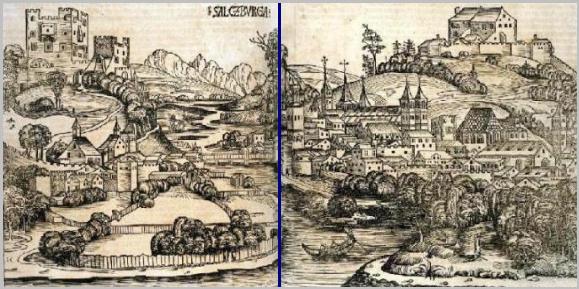
| Above: Old Salzburg from Hartmann Schedel: Weltchronik. Nürnberg 1493 |
04 Arno 784-821
05 Adalram 821-836
06 Leutram 836-859
07 Adalwin 859-873
08 Adalbert I 873
09 Dietmar I 873-907
10 Pilgrim I 907-923
11 Adalbert II 923-935
12 Egilholf 935-939
13 Herhold 939-958
14 Friedrich I 958-991
15 Hartwig 991-1023
16 Günther 1024-1025
17 Dietmar II
1025-1041
18 Baldwin 1041-1060
19 Gebhard 1060-1088
20 Thimo 1090-1101
05 Adalram 821-836
06 Leutram 836-859
07 Adalwin 859-873
08 Adalbert I 873
09 Dietmar I 873-907
10 Pilgrim I 907-923
11 Adalbert II 923-935
12 Egilholf 935-939
13 Herhold 939-958
14 Friedrich I 958-991
15 Hartwig 991-1023
16 Günther 1024-1025
17 Dietmar II
1025-1041
18 Baldwin 1041-1060
19 Gebhard 1060-1088
20 Thimo 1090-1101
53 Ernest of Bavaria 1540-1554
54 Michael von Khuenburg 1554-1560
55 Johann Jakob Khun von Bellasy 1560-1586
56 Georg von Khuenburg 1586-1587
57 Wolfgang Dietrich von Raitenau 1587-1612
58 Marcus Sittich von Hohenems 1612-1619
59 Paris von Lodron 1619-1653
60 Guidobald von Thun 1654-1668
61 Maximilian Gandolf von Khuenburg 1668-87
62 Johann Ernst von Thun 1687-1709
63 Franz Anton von Harrach 1709-1727
64 Leopold Anton von Firmian 1727-1744
65 Jakob Ernst von Liechtenstein-Castelcorno 1744-47
66 Adnreas Jakob von Dietrichstein 1747-1753
67 Sigismund III von Schrattenbach 1753-1771
68 Hieronymus von Colloredo 1772-1812
54 Michael von Khuenburg 1554-1560
55 Johann Jakob Khun von Bellasy 1560-1586
56 Georg von Khuenburg 1586-1587
57 Wolfgang Dietrich von Raitenau 1587-1612
58 Marcus Sittich von Hohenems 1612-1619
59 Paris von Lodron 1619-1653
60 Guidobald von Thun 1654-1668
61 Maximilian Gandolf von Khuenburg 1668-87
62 Johann Ernst von Thun 1687-1709
63 Franz Anton von Harrach 1709-1727
64 Leopold Anton von Firmian 1727-1744
65 Jakob Ernst von Liechtenstein-Castelcorno 1744-47
66 Adnreas Jakob von Dietrichstein 1747-1753
67 Sigismund III von Schrattenbach 1753-1771
68 Hieronymus von Colloredo 1772-1812
| SALZBURG EXILES |
35 Weichard von Pollheim 1312-1315
36 Friedrich III von Liebnitz 1315-133837
37 Heinrich Pyrnbrunner 1338-1343
38 Ordulf von Wiesseneck 1343-1365
39 Pilgrim II von Pucheim 1365-1396
40 Gregor Schenk von Osterwitz 1396-1403
41 Eberhard III von Neuhaus 1403-1427
42 Eberhard IV von Starhemberg 1427-1429
43 Johann II von Reichensperg 1429-1441
44 Friedrich IV von Emmerberg 1441-52
45 Sigismund I von Volkersdorf 1452-1461
46 Burchard von Weissbruch 1461-1466
47 Bernhard II von Rohr 1466-1482
48 Bernhard III Peckenschlager 1482-1489
49 Friedrich V von Schallenburg 1489-1494
50 Sigismund II 1494-1495
51 Leonard von Keutschach 1495-1519
52 Matthäus Lang von Wellenburg 1519-1540
36 Friedrich III von Liebnitz 1315-133837
37 Heinrich Pyrnbrunner 1338-1343
38 Ordulf von Wiesseneck 1343-1365
39 Pilgrim II von Pucheim 1365-1396
40 Gregor Schenk von Osterwitz 1396-1403
41 Eberhard III von Neuhaus 1403-1427
42 Eberhard IV von Starhemberg 1427-1429
43 Johann II von Reichensperg 1429-1441
44 Friedrich IV von Emmerberg 1441-52
45 Sigismund I von Volkersdorf 1452-1461
46 Burchard von Weissbruch 1461-1466
47 Bernhard II von Rohr 1466-1482
48 Bernhard III Peckenschlager 1482-1489
49 Friedrich V von Schallenburg 1489-1494
50 Sigismund II 1494-1495
51 Leonard von Keutschach 1495-1519
52 Matthäus Lang von Wellenburg 1519-1540
Catholic Encyclopædia.
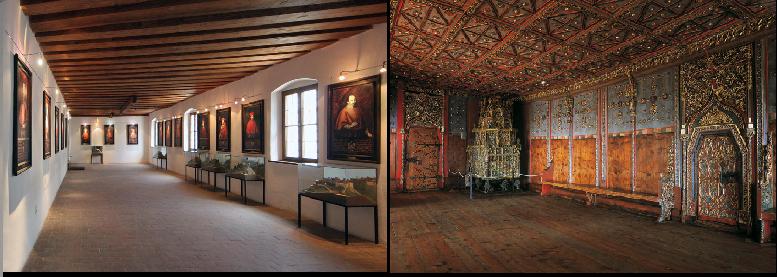
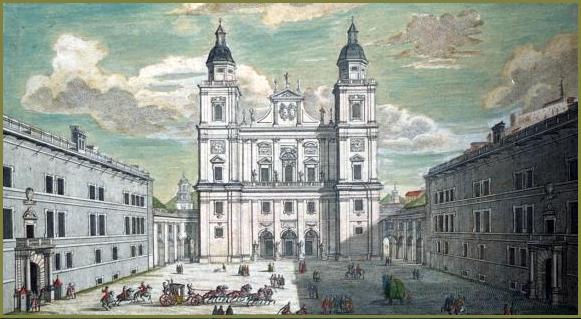
| The archbishops lacked for nothing and lived a life of pomp and luxury even during hard times for the local population. The Cathedral and rooms at Hohensalzburg fortress (click) |
| St. Boniface completed the work of St. Rupert, and placed the Diocese of Salzburg under the Primatial See of Mainz, substituting the Benedictines for the Irish monks in St. Peter's. The abbot-bishop Virgil was succeeded by Arno, who enjoyed the respect of Charlemagne, who, after overthrowing the Avars, assigned him the missionary territory which included all of the land between the Danube, the Raab, and the Drave. While Arno was at Rome attending to some business for Charlemagne, Pope Leo III appointed him Archbishop over the bishops of Bavaria. When a dispute concerning the delimitation of their ecclesiastical provinces broke out between Aquileia and Salzburg, Charlemagne declared the Drave the boundary. The dignity of the archbishops as territorial sovereigns can therefore be traced to the great Charlemagne. The oldest library in Austria was formed when Arno, at the court of the great emperor, had manuscripts copied in 150 volumes. |
| Ruprecht of Salzburg (c.660-710), Frankish founder of Salzburgis, was a scion of a Frankish royal Merovingian family. A contemporary of Childebert III, king of the Franks, he was a bishop of Worms until 697, at which point he became a missionary to Regensburg where he baptized a number of nobles. After considerable success, he moved on to Altötting and converted the locals and went on to convert a large area of the Danube where he introduce education and social reforms. He promoted the salt mines in the ruined Roman town of Juvavum and renamed the place "Salzburg." He is the Catholic patron saint of salt miners. The Salzburg Cathedral is dedicated to him. |
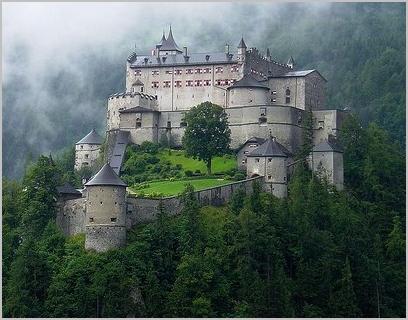
| Festung Hohensalzburg's Nasty Sister |
| The archbishops enjoyed more than one mighty castle. Burg Hohenwerfen stands high above the Austrian town of Werfen in the Salzach valley, approximately 25 miles south of Salzburg, surrounded by the Berchtesgaden Alps and the adjacent Tennengebirge mountain range. The fortification was built between 1075 and 1078 during the Imperial Investiture Controversy by the order of Archbishop Gebhard of Salzburg as a strategic bulwark atop a 509 foot high rock. Gebhard had three major castles extended to secure the Salzburg archbishopric, but Gebhard himself was expelled in 1077 and could not return to Salzburg until 1086, only to die at Hohenwerfen two years later. In the following centuries, Hohenwerfen served the archbishops as a military base, a prison, a residence and hunting retreat. The fortress was extended in the 12th century and to a lesser extent again in the 16th century during the German Peasants' War, when in 1525 and 1526 riotous farmers and miners moving towards Salzburg set fire to the castle, severely damaging it. After their unsuccessful siege of the Hohensalzburg Fortress, the farmers were forced to surrender and Prince Archbishop Matthäus Lang ordered those of them he didn't have murdered to re-built the castle. The great castle imprisoned and occasionally tortured many people, from the lowliest Protestant farmer to various noblemen and even some of the archbishops aside from Gebhard. Archbishop Adalbert III, arrested by his own ministeriales in 1198, Count Albert of Friesach (in 1253), the Styrian governor Siegmund von Dietrichstein, captured by insurgent peasants in 1525, and Prince-Archbishop Wolf Dietrich Raitenau, who died there, were among its guests. Prince Archbishop Johann Kuen-Belasy ordered a massive re-modelling of Hohenwerfen in 1563. Prince Archbishop Johann Jakob ordered the construction of a large, central keep for the castle in 1573. Adaptations were made to the fortress during the Thirty Years War and a gunpowder tower was erected during the reign of Prince Archbishop Paris Lodron in 1623. |