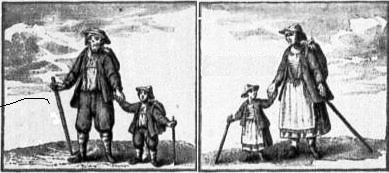
| The Deferegger Expulsion |
Assmayr
Besteandsmayr
Bichl
Blassnig
Brugger
Eder
Eggermayr
Erlacher
Erlspacher
Feldner/Veldner
Gasser
Gatteheim
Graber
Grandegger
Grosslercher
Gruebner
Besteandsmayr
Bichl
Blassnig
Brugger
Eder
Eggermayr
Erlacher
Erlspacher
Feldner/Veldner
Gasser
Gatteheim
Graber
Grandegger
Grosslercher
Gruebner
Kuchlmayr
Lantaler
Lazacher
Leonharter
Lottersperger
Lukasser
Marschaller
Matrei
Mayrhofer
Mellizer
Milburger
Monizer
Moser
Neuhauser
Niederegger
Niederwanger
Lantaler
Lazacher
Leonharter
Lottersperger
Lukasser
Marschaller
Matrei
Mayrhofer
Mellizer
Milburger
Monizer
Moser
Neuhauser
Niederegger
Niederwanger
Prugger
PrunnerPrünstler
Putzhueber
Rainer
Ranacher
Ranzer
Rauter
Ratschitsch
Rauter
Rotgärber
Sauter
Schmidsrauter
Schneider
Schwaig
Selmpacher
Stainer
PrunnerPrünstler
Putzhueber
Rainer
Ranacher
Ranzer
Rauter
Ratschitsch
Rauter
Rotgärber
Sauter
Schmidsrauter
Schneider
Schwaig
Selmpacher
Stainer
| Some Defferegger Exiles' Names |
To Nürnberg & Gunzenhausen: Breitinger, Fledner, Gasser, Jaggler, Kell, Krammetsvogel, Mellizer, Niederwalder,
Ortner, Stemberg, Prugger, Schmidtsrauter, Hopfgartner
Ortner, Stemberg, Prugger, Schmidtsrauter, Hopfgartner
| The Deferegger Valley was divided into two parts: the outer part of the capital of St. Veit was part of Salzburg, while the inner part of St. Jakob was part of County Tyrol. Many Defereggers had long ago turned to peddling for a living. In winter, they sold pottery and wooden ware in the surrounding valleys, and in summer they peddled blankets and carpets in other regions where they purchased inspirational Lutheran books to bring home and read on long winter nights. Therefore, for over 100 years, residents of the Deferegger Valley had secretly instructed their children in Protestantism. In 1683, a visiting hawker of Catholic religious tokens complained that he had been abused by some Protestant farmers in the valley. This was brought to the attention of Salzburg Archbishop Max Gandolph. First, he banished the ringleaders, including one Martin Veldner. He then sent two Capucin monks into the valley, but they were unsuccessful: most Defereggers stubbornly remained Lutheran. The furious Archbishop decided upon mass expulsion of all known Protestants. Before 1685, approximately 3,000 inhabitants lived in the valley. The Defereggers were allowed only 36 to 50 days to leave their homes in the valley and, under the cruelest circumstances, 691 adults and 289 older children were expelled on an extremely frigid November 7, 1684. All of their children under the age of 15 were held back so as to be educated as Catholics "to protect them and save them from eternal damnation". 289 of these young children were retained and raffled off to Catholic farmers. Some of the exiles tried to hide their babies and tiny children in baskets and under blankets, but they were stopped at the borders and searched. The Deferegger Protestants fled mostly to Stuttgart, Göppingen, Herrenberg, Urach and Ulm. Some Defereggers later succeeded at kidnapping their own children (at the very least 56 were located and retrieved by their parents), so there were suggestions that the stolen children be housed together and guarded with the military. Since this measure was not practical, officers of the court were sent into the valley to keep watch, and farmhands were offered a reward of twelve Reichstalern for each "kidnapper" discovered. After a time, attempts by the new Archbishop of Salzburg to persuade the Deferegger from Ulm to return to the Defereggental failed, but according to the Emperor's command of 1690, children under 15 years with sufficient maturity could state if they wanted to be Protestant, and 14 of these children did and were thus allowed to emigrate and join their parents who had to pay a ransom. Finally, through the mediation of the Margrave of Baden and the Prussian Elector Friedrich Wilhelm, others were eventually able to get back some of their children as well, but only if they agreed to go, and some children by then had been frightened into wanting to remain Catholic. Although the emigration of the Defereggers was inspired primarily from religious grounds, economic reasons also played a role. There was poverty in the valley due to overcrowding, high taxes, heavy debt, unfavorable inheritance laws and the abandonment of mining. By 1720, a full third the people from the St. Jakob portion were lost, and the St.Veit portion lost over half. Even after the expulsions, Protestantism was not silenced entirely, and suspected Protestants continued to teach and to preach to each other, but by 1725, they only amounted to 16 people. |
Grün
Jaggler
Haidacher
Handelsmann
Hintergschwendter
Hirber
Hofer
Holzer
Hopfgartner
Hürber
Jaggler
Jesacher
Käufer
Kleinlercher
Köfler
Kröll
Jaggler
Haidacher
Handelsmann
Hintergschwendter
Hirber
Hofer
Holzer
Hopfgartner
Hürber
Jaggler
Jesacher
Käufer
Kleinlercher
Köfler
Kröll
Oberegger
Oberswalder
Obetshofer
Ortner
Oxner
Ladstetter
Leonharter
Lercher
Pälhueber
Passler
Pergler
Pichle
Plasischger
Plasner
Plassnig
Pröser
Oberswalder
Obetshofer
Ortner
Oxner
Ladstetter
Leonharter
Lercher
Pälhueber
Passler
Pergler
Pichle
Plasischger
Plasner
Plassnig
Pröser
Stemberger
Stessl
SteinerSteinkaserer
Stopp
Tausch
Tegischer
Troyer
Treuer
Unterbergler
Unteregger
Untergassmayr
Unterlercher
Urbaner
Veldner
Veiter
Veldner
Zathammer
Stessl
SteinerSteinkaserer
Stopp
Tausch
Tegischer
Troyer
Treuer
Unterbergler
Unteregger
Untergassmayr
Unterlercher
Urbaner
Veldner
Veiter
Veldner
Zathammer
| THE SALZBURG EXILES |