| "German Village" Utah and other Genocidal Plans |
| "The bombing must be directed essentially against working class houses. Middle class houses have too much space around them, and so are bound to waste bombs." Frederick Lindemann, Lord Cherwell |
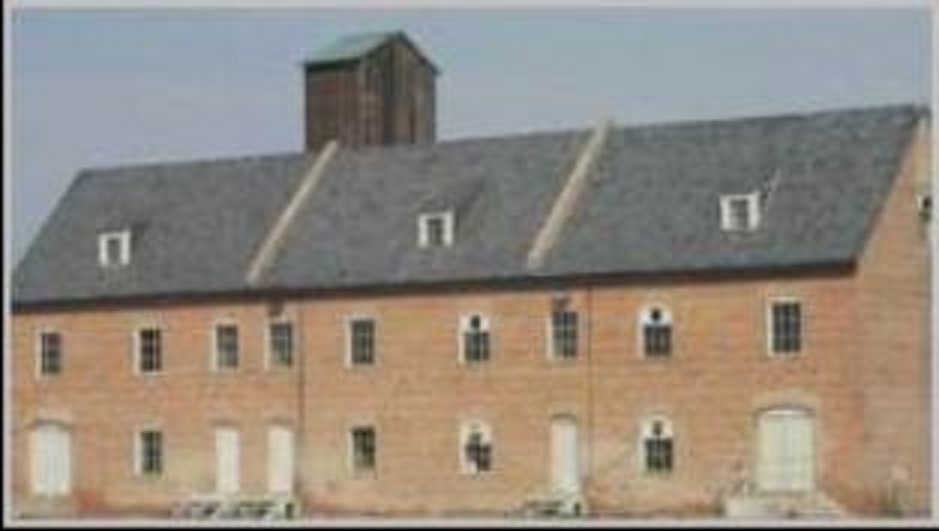
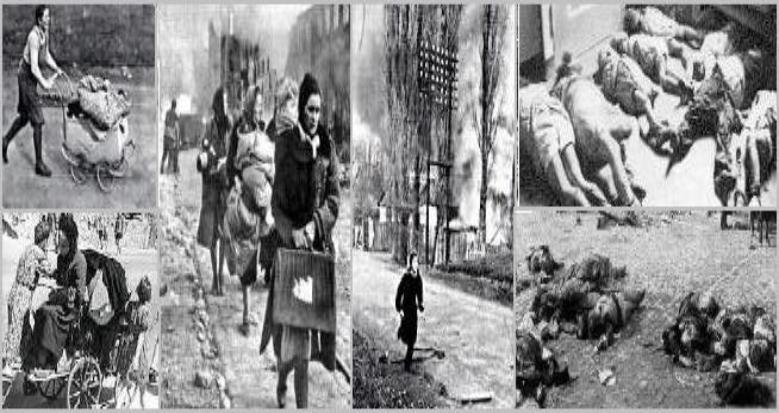
| It is not your happy pseudo-Bavarian tourist village in the USA. No good beer, buxom barmaids or oom- pah bands here. This "German Village" in the Utah desert is all that remains of a full-scale, six block replica of typical pre-war working class housing in Berlin. It is on a test site created by the Allied military to develop weapons of mass destruction for use against German civilians. It was part of a larger five square mile German/Japanese "doomtown" built in 1943. Despite their "successes" with their 1,000 bomber fire raids against Cologne and Hamburg, the British were frustrated by their inability to ignite the same type of firestorm in Berlin, so Allied scientific advisors urged the creation of a program of incendiary experimentation on exact replicas of German workers' housing. According to the Air Force, Dugway's German village "corresponded to the type of housing in which 80 percent of the German industrial population lived." Using forced labor from Utah state prison inmates, it was completed in 44 days and was similar to the civilian housing built for test destruction in dummy towns in England for use by the RAF. Commissioned by the chemical warfare corps of the US army (Standard Oil), it was created by a German-born architect Erich Mendelsohn, Konrad Wachsmann and other disgruntled former German residents who had recently been assisted in moving to the US with the help of Albert Einstein and others. They would join emigre Walter Gropius to work on the development of prefabricating such systems. Before emigrating, Gropius (supported by composer Arnold Schoenberg, writer Franz Werfel and Einstein) operated a successful school of architecture in Germany in the mid-twenties called the “Bauhaus” Several unnamed architects affiliated with the “Gropius Group” at Harvard helped in the planning of "German Village" and participated in the research studies on how to effectively incinerate or explode typical German residential city structures and buildings. They eagerly joined the Dugway Proving Ground project, where napalm and poison gases were developed and tested for use against civilians in Germany. Scientist Frederick Lindemann, Churchill's Minister of Defence and life-long friend of Einstein, was educated in Germany and used his contacts to arrange an early exodus for selected German scientists, many of whom became prominent in the research in the US and UK regarding the bombing of Germany. Once Lindemann became Churchill's key scientific advisor, few if any insiders had greater influence. Lindemann wrote and circulated the paper that first advocated heavily bombing civilian residential neighborhoods in German cities, convinced that making large numbers of German civilians homeless (or dead) would "undermine the enemy's morale". Lindemann's homicidal plans were quickly adopted by Churchill. Lindemann was made Lord Cherwell in 1941, and created "Viscount of Cherwell" in 1956. It was said that he had an "almost pathological hatred of Germans and a medieval desire for revenge" tantamount to that of Roosevelt's advisor, Henry Morgenthau Jr. Working in conjunction with Hollywood RKO studio's "Division of Authenticity", they designed the model town with the sole intention of destroying Berlin's working-class districts and non-combatant civilian inhabitants in conformance with Allied plans beginning in 1943. The "Japanese Village" (since vanished) was designed by the Czech-educated architect Antonin Raymond who represented Czechoslovakia in Japan as an honorary consul and designed and built many buildings in Japan, where he was familiar with their architecture. Meticulously duplicating the aging and specific gravity of older German construction after exhaustively researching factors such as roof area coverage critical to an incendiary parameter of target neighborhoods in Berlin, the fire experts and architects even simulated the effect Berlin rain might have on combustibility. RKO duplicated the typical interiors and furniture of Berlin's working class households right down to their linen, bedding, toys, drapes and bedside Bibles. Wood similar to that used in Germany was specially imported from Russia. Experimenting with the best methods of destroying real German cities, napalm (the same M-69 napalm which the USA dutifully supplied to the RAF for their terror bombing of German towns), gas, anthrax and incendiary bombs were all used against the fake German Village, and it had to be rebuilt several times. The success of their diabolical planning later proved lethal, and German women and children paid the price. Only a single block of the original village is left today to bear witness to the combined forces of Hollywood, the oil industry and dedicated workers, who with great financial resources at their disposal, feverishly abetted the mass murder of thousands of German civilians. Dugway itself, historically shrouded in official secrecy, is toxic after years of weapons testing. Erich Mendelsohn went on his way to become the darling of "modernist" architecture. The heinous nature of this planned extermination took place on all levels. The American counterpart to Churchill's cold blooded adviser Frederick Lindemann (Lord Cherwell) was Franklin Roosevelt's close friend and adviser, Henry Morgenthau, Jr. His plan to "demilitarize" Germany involved disarming all Germans, destruction of all "war material" including old monuments, severe punishment for war crimes, a total ban on any uniforms, including scouting, a prohibition of parades plus the disabling of all military bands and destruction of any military music, past or present. All aircraft, including gliders, military or commercial, were to be confiscated and no German was to be permitted to operate or help operate any aircraft anywhere. He wanted the policing of Germany and the civil administration in Germany to be assumed with severity by Germany's former foes. Instead of reparations, he wanted global confiscation of all German assets with Germany partitioned into harmless "pastoral" units while Germans were sent as slaves to rebuild the countries of her former enemies. He did not want Germany rebuilt, but to remain impotent and dependent on handouts to live "as a dog is dependent on its master" so as to break the will of the people. His new boundaries for Germany divided East Prussia and Silesia between the U.S.S.R. and Poland, the Saar going to France along with adjacent territories bounded by the Rhine and the Moselle Rivers, and the Keil Canal and the Ruhr and its surrounding industrial areas to be internationalized with all industry dismantled and sent to Allied Nations. He urged that all equipment be removed from mines and mines closed, all German schools and universities closed until an Allied re-education program was in place to brainwash the Germans, and all German radio stations and newspapers, magazines, weeklies, etc. discontinued until his these policies were established. He wanted all large estates broken up and divided among "the peasants". Roosevelt publicly shelved the Morgenthau plan, but only after its exposure in the media caused concern. However, it permeated the American administration and influenced every single aspect of subsequent Allied planning: large groups of male German POWs were sent into slavery as forced workers abroad and kept as long as possible, German adults and children underwent re-education and experienced intentional starvation, there was a redistribution of wealth and German lands in the east were given to the communists and there was a revenge seeking War Crimes trials at Nürnberg. Full censorship was instituted and there was destruction of German books, art and cultural monuments. In November, 1945, General Eisenhower, as Military Governor of the U.S. Occupation Zone, approved the distribution to American military officials in Germany of 1,000 free copies of Morgenthau's book "Germany is Our Problem" in which his plan was laid out. Further, in the New York Post for Nov. 24, 1947, Morgenthau himself stated: "The Morgenthau Plan for Germany became part of the Potsdam Agreement, a solemn declaration of policy and undertaking for action signed by the United States of America, Great Britain and the Union of Soviet Socialist Republics." The Morgenthau Plan lurked in the shadows in the Joint Chiefs of Staff Directive 1067 (April 1945–July 1947) which explicitly prohibited U.S. Occupation authorities from providing any economic or reconstruction assistance of any kind to the Germans, not even to maintain the current economic levels. The first "level of industry" plan signed in 1946 stated that German heavy industry was to be lowered to 50% of its 1938 level. The occupation forces of all nations were obliged to ensure that German standards of living were lowered to the level of its European neighbors with which it had been at war with, in particular that of France. To destroy future German economy, a cap of about 25% of the prewar production level was put on German steel production, and therefore steel plants were dismantled. All armaments plants, including some that could have been converted to civilian use or desperately needed housing, were dismantled or destroyed, likewise, a large proportion of operational civilian plants were dismantled and sent to the victors, mainly France and Russia. The U.S. government, stating that its noble purpose was the "ultimate destruction of the war potential of German forests", went so far as to embark upon a massive clear cutting of the German forests and then shipped the timber to the U.S.A., despite the desperate shortage of heat and housing in bombed out Germany and the millions of ethnic Germans refugees needing shelter. They intended to deforest the land to such a degree that trees could be replaced only by "century long forestry development". Early U.S. plans for "industrial disarmament" included detaching the Saarland and the Ruhr from Germany and even as late as March 1947, there were still plans to allow France annex the Ruhr. Poland, after its German citizens were expelled, had already been given almost a quarter of pre-war German territory, including the important industrial centers and the richest coal fields in Europe. The Allies harvested all German technological and scientific achievements they found and farmed out thousands of the brightest German researchers as slaves to the Soviet Union, Britain and the USA. The victors confiscated intellectual property of immense value, including all German patents both in Germany and abroad, which they turned around and licensed to Allied companies. The "intellectual reparations" taken by the U.S., Britain and the Soviets amounted to billions and billions of dollars. Germany was meanwhile reduced to less than the standard of life it had known at the height of the Great depression in 1932 and reduced to a smaller size than she was in the year 1125. This led to millions more unnecessary civilian deaths from starvation and disease in the first couple of years after the war. Despite widespread starvation, American military personnel and their wives were given strict orders to destroy or otherwise render inedible their own leftover surplus so as to ensure it could not be eaten by German civilians, a policy in US zones throughout all of Germany. A Report by former U.S. President Herbert Hoover in March of 1947, argued for a change of policy. Speaking of the expected consequences of the actions above, he said: "There are several illusions in all this 'war potential' attitude. There is the illusion that the New Germany left after the annexations can be reduced to a 'pastoral state'. It cannot be done unless we exterminate or move 25,000,000 people out of it." Living conditions in Germany reached their lowest point in 1947, even worse than in 1945 or 1946. At an average ration of 1040 calories a day, malnutrition was at its worst stage in post-war Germany. In that year, the U.S. Congress warned that the continuation of the present policies "can only mean one of two things, (a) That a considerable part of the German population must be 'liquidated' through diseases, malnutrition, and slow starvation for a period of years to come, with the resultant dangers to the rest of Europe from pestilence and the spread of plagues that know no boundaries; or (b) the continuation both of large occupying forces to hold down "unrest" and the affording of relief mainly drawn from the United States to prevent actual starvation." Only when Germany's punishments held back the general European recovery, when the continued scarcity of food and goods in Germany led to considerable expenses for the occupying powers and when poverty and famine in Europe were not abating did a change of policy begin to take place. Murder was an option. Stalin had proposed at the Tehran Conference in late 1943 that at least 50,000 and perhaps 100,000 German officers should be executed. This idea found a warm reception from the Roosevelt team. This is exactly what took place after the war, only in the USSR it did not simply pertain to officers but to most POWs. Like Roosevelt, Churchill publicly disagreed with Morgenthau's Plan, but Roosevelt suggested that Morgenthau's Stalinist friends such as Harry Dexter White (later exposed as a Soviet agent) continue to discuss it with Lord Cherwell who persuaded Churchill to change his mind, and Churchill later stated: "At first I was violently opposed to the idea. But the President and Mr. Morgenthau, from whom we had much to ask, were so insistent that in the end we agreed to consider it" (Churchill, "The Tide of Victory" 1954 pp. 138–139). Britain was then quickly rewarded with US money. Morgenthau's Plan, if fully implemented, was calculated to exterminate approximately 20 million Germans and the furtive partial implementation of his plan caused at least 15 million unnecessary German deaths, and more later as a secondary result. Other than the Dictates of Versailles and St. Germain, which also inflicted collective guilt and collective punishment of all Germans, various other equally genocidal plans hatched in the USA in the 20th century realized partially success. The 'Kaufman Plan' was set forth in a nasty, neurotic little book called "Germany must Perish" which suggested the castration of all fertile German men over 16 years of age and importing foreigners to Germany to alter the ethnic base. While this idea might be considered the work of a crank, other "plans" for Germans were developed by more respectable, conventional sources. The 'Hooton Plan' was conjured up by a clan of Harvard intellectuals led by Anthropology Professor Ernest Albert Hooten. In a newspaper article titled, "Breed war strain out of Germans" published in New York's Peabody Magazine of January 4, 1943, Hooten suggested various genetic manipulations which would "destroy German nationalism and aggressive ideology", including sentencing German males to a lifetime of slavery abroad while foreign men occupy Germany long enough to impregnate German women and pollute the German gene pool: "For a period of 20 years or more utilize the bulk of the present German army as rehabilitation labor units in devastated areas of the Allied Nations and elsewhere". Millions of German men were indeed sent into slavery abroad while German women remained at home as fair game. Britain had plenty of "plans" for a people they deemed inferior and genetically menacing as well. Author E. O. Lorimer, in his book 'What the German Needs', said of the Germans: "It is now widely accepted amongst those who have given thought to the problem of Germany, that the world has not a normal, rational people to deal with, but a nation suffering from an acute attack of homicidal mania, rendered more dangerous by a background of specious philosophy and more horrible by a lust for inhuman, calculated cruelty; a nation moreover subject to the recurrence of similar attacks, of which this last is only the most severe ..." From his carmchair, the author's suggested solution to the "German problem" included a drastic reduction in the size of Prussia, the removal of every German from Danzig and East Prussia and the use of enslaved German POWs under Allied control "to build and clear, to dig and drain", again, also exactly what ended up happening. The fear caused by these insidious plans and ghastly ideas, which were well circulated among the German civilians, combined with the reality of an inhumane bombing campaign and strict demands for unconditional surrender, prolonged any hopes of a quick peace. Genocidal plans for Germans were nothing new; they had their roots in World War One. Who can forget Rudyard Kipling's words before the Great War even broke out: "the Germans do evil deliberately. It is their nature. It is the mark of their nationality. They are like microbes wherever they abound; the evil develops and infects everything roundabout. Civilized nations must resort to the sterilizing process; they must put into force measures of international hygiene." Note: Like the Morgenthaus and the great banking families that enriched themselves by both conflicts, there were many other familial carry-overs from World War One. Edward Bernays worked as a propagandist for George Creel's Committee for Public Information in World War One as part of the effort to fan the flames of war in favor of Britain by creating rabid Germanophobia. Arrogant, racist and devious, Bernays excelled at mind control, subliminal messaging and other public brainwashing tactics. The name Bernays ironically regurgitates itself in the form of Col. Murray Bernays, who played a major role in the planning of "German re-education" after World War Two and also planned the legal framework and procedures for the Nürnberg War Crime Trials. Although Cohen was his original surname, he legally changed his name to that of his wife shortly after his marriage to Anna Freud Bernays, none other than sister to Edward Bernays. Both were niece and nephew of Sigmund Freud. Below: Mendelsohn, Wachsmann, Gropius, Einstein, Lindemann, Morgenthau, and below them, the fruit of their labor (click). |

| click |
| click |