| The Franks and Franconia |

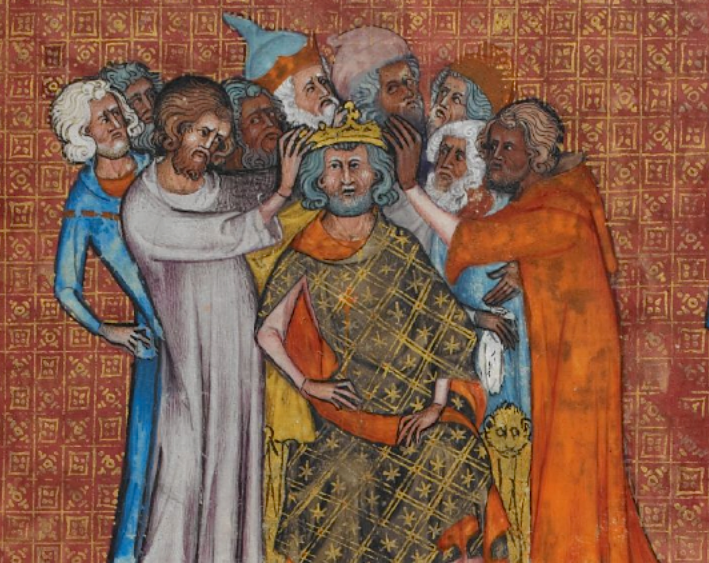
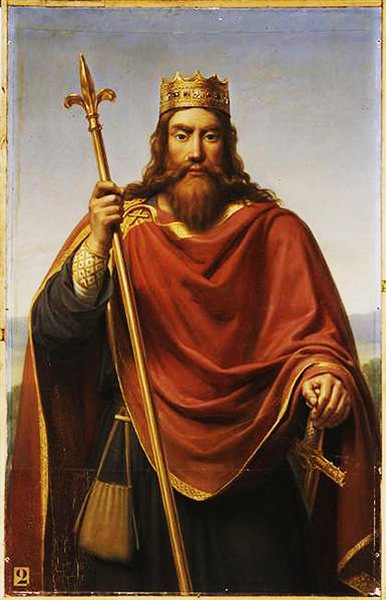
| The concept of feudalism was a combination of German and Roman practices developed and practiced most widely by the Franks, a large confederation of west Germanic tribes living north and east of the Lower Rhine who, wanting freedom from both other Germans and the Romans, united in the 3rd century AD and adopted the common name "Frank" (derived either from the word "Free" or "Spear"). Around 260, they made an invasion across the Rhine into the Roman Empire. They were the most successful of the German tribes and by the 4th century, many of them were living in the area of Belgium and the Rhineland as allies of Rome, while other Franks were living in adjacent German land. They maintained independence and later helped defeat the invading Huns. By legend, the Franks claimed that their people were descended from the ancient Sicambri and Trojans. An anonymous work of 727 called 'Liber Historiae Francorum' states that following the fall of Troy, 12,000 Trojans led by chiefs Priam and Antenor moved to the Tanais (Don) river, settled in Pannonia near the Sea of Azov and founded a city called "Sicambria", and then two generations later arrived at the Rhine in the late fourth century. An even earlier variation of this story states that an early king named Francio was the namesake of the Franks. Since they lived close to the Romans in Gaul for so long, the Franks developed and modeled their own kingdoms in a similar manner to Roman civilization and once Roman authority was gone in the 5th century, many of these Frankish kingdoms united under Merovich (reigned 448-458) whose grandson, Clovis (reigned 481-511) converted to Christianity and became the first Frankish chief to be made king of Franconia. The Franks under Clovis conquered the Kingdom of Soissons of the Romans and expelled the Visigoths from southern Gaul, establishing Frankish hegemony over most of Gaul, excluding Burgundy, Provence, and Brittany, which he left to his successors, the Merovingians, to conquer. Clovis divided his realm between his four sons, and they in turn divided their kingdoms between their sons. Franconia was eventually incorporated within the kingdom of Austrasia and at a later period came under the rule of Charlemagne. The Franks were so efficient and successful that all Germanic peoples grew to be considered "Franks". The Christian Frankish kingdom continued to develop througout the 6th century. Unlike Romans, whose officials were selected more for their ability, the ancient German tribes believed that their clan's ruling dynasties were descended from, I quote: "In their ancient songs, which are their only records or annals, the Germans celebrate their God Tuisto (Theos - God) (Isaiah 7:14 Septuagint LXX [certain monuments and tombs, inscribed with Greek characters]) created from the earth, and his son Mannus (Matthew 1:23), as the Father and Son of their race. Germanus = Pure Race (I concur in opinion with those who deem the Germans never to have intermarried with other nations; but to be a race, pure, unmixed, and stamped with a distinct character. - Tacitus). In their ancient songs, which are their only records or annals, the Germans celebrate their God Tuisto (Theos - God) (Isaiah 7:14 Septuagint LXX [certain monuments and tombs, inscribed with Greek characters]) created from the earth, and his son Mannus (Matthew 1:23), as the Father and Son of their race. Germanus = Pure Race (I concur in opinion with those who deem the Germans never to have intermarried with other nations; but to be a race, pure, unmixed, and stamped with a distinct character. - Tacitus)". The Franks incorporated their "Ur-Christentum" belief into their "new" Christianity (Catholic) by having their leaders "anointed" by a bishop. This adaptation to an old German concept allowed the Church to develop the idea of the "Divine Right of Kings", a leader chosen by God. The Franks turned the Roman estate practices into what became known as the Manor System. |
| Saving Christianity in Europe |
| The Europeans had battled an Arab conquest of Western Europe long before the Ottoman Invasions, most notably at The Battle of Tours (also called the Battle of Poitiers) on October 10, 732, one of the most decisive battles in all of history. After the conquest of Syria, Egypt, and North Africa, Islamic armies embarked upon their own crusades in search for land and in hopes of putting an end to Christianity. They began to invade Western Europe under the leadership of the governor of Spain, Abd-er Rahman, who led an infantry of 60,000 to 400,000 soldiers across the Western Pyrenees and toward the Loire River. Just outside the city of Tours, they were met by the Austrasian Mayor of the Palace, Charles Martel and his Frankish and Burgundian Army who had no cavalry. Known as "Karl the Hammer" for his hammer-like weapon, Charles Martel began seizing Church lands in order to raise the money necessary to build and train an army that could withstand the Muslim horsemen. As the invading Moslems rushed forward on their well-trained horses, the Frankish Army, composed of foot soldiers armed only with crude weapons, withstood the attack, its infantry holding its ground for the two to seven day battle which ended when the Franks captured and killed Abd-er Rahman. Some sources give the Christian battle losses at around 1,500 and Abdul Rahman's armies at about 10,000. The Moslem army withdrew overnight, shocked at the death of their leader, and retreated back across the Pyrenees, never to return again. Most modern historians have regarded Tours as a landmark battle that marked the high tide of the Muslim advance into Europe. The battle helped lay the foundations of the Carolingian Empire and Frankish domination of Europe for the next century. Born in 686, Charles Martel was the son of Pippin the Middle and his mistress Alpaida. Shortly before his death in 714, Pippin's wife, Plectrude convinced him to disinherit his illegitimate children in favor of his eight-year old grandson Theudoald, and following Pippin's death, Plectrude had Charles imprisoned. This enraged the Frankish nobility. Charles escaped from captivity by the end of 715, and found great support among the people. Over the next three years, he conducted a civil war that culminated in the Battle of Soissons against King Chilperic and the Duke of Aquitaine, Odo the Great. Victorious, Charles was able to gain recognition for his titles as mayor of the palace and duke and prince of the Franks. He consolidated power as well and conquered Bavaria and Alemmania, securing Frankish lands where he focused on the administration of his realm and expanded his influence. Charles Martel first married Rotrude of Treves with whom he had five children. These included Carloman and Pippin the Younger. Following Rotrude's death, Charles married again and had another son, and he also had four children with a mistress. When he died in 741, his lands were divided between his sons Carloman and Pippin the Younger. The latter would father the great leader, Charlemagne. By the 8th century, the Frankish warrior on horseback was superior to any European infantry force, and by the end of the century, the Frankish state ruled over large parts of western Europe. But since maintaining the lifestyle of these knights was expensive with their costly equipment and families to support, the Frankish kings decided to introduce a system that would provide trained soldiers for the crown and also put reliable men in local positions of authority throughout the kingdom by combining the manor system with all their knights. The German noble was therefore surrounded by loyal lesser nobles and commoners in a fellowship bound together for mutual protection, and although they farmed and hunted, war was, by the nature of the times, a central element in their lives. The Frankish kingdom culminated in one man: Charlemagne. The Carolingian Empire and its successor states were Frankish and one of the most active forces in spreading Christianity over western Europe. With Charlemagne's death, his son Ludwig (Louis) the Pious inherited the throne. After Ludwig's death around the year of 840 AD, warfare broke out between his three sons. Lothair, the eldest, was to receive most of the land but his half-brothers Karl (Charles) the Bald and Ludwig (Louis) the German allied against Lothair for the wealthy inheritance of land and title. After Lothair was defeated, he asked for peace and the war was concluded with the Treaty of Verdun of 843, where the territories were divided into three kingdoms, one for each of the brothers - Lothair in Italy, Ludwig the German in Bavaria, and Karl the Bald in Aquitaine. After the treaty, Franconia in Bavaria became the center of the East Frankish or German kingdom and was once the most important of the duchies which arose on the ruins of the Carolingian empire. The land was divided into "counties" which were ruled by counts, of whom the feuding families of Conradine and Babenberg were the most prominent. Conrad, a member of the former family, took the title of "Duke of Franconia" around the year 900 and was chosen as German king. In 911, he handed over the rule of Franconia to his brother Eberhard, who remained on good terms with Conrad's successor Heinrich I. the Fowler, but rose against the succeeding king, Otto the Great. Franconia's influence had began to decline as the power of the Saxon kings increased. Eberhard was killed in battle in 939 and his territories were divided into Rhenish Franconia and Eastern Franconia. The most influential family in Rhenish Franconia was that of the Salians, headed early in the 10th century by Conrad the Red, duke of Lorraine, and his son-in-law of Otto the Great. Conrad, his son Otto and his grandson Conrad are sometimes called dukes of Franconia. In 1024, his great-grandson Conrad, also duke of Franconia, was elected German king as Conrad II. and he founded the line of Franconian or Salian emperors. The actual word Franconia, or Franken, was first used in 1013 and was applied to a portion of the land occupied by the Franks. It is the name of the stem duchy of medieval Germany that stretched along the valley of the Main from the Rhine to Bohemia, bounded on the north by Saxony and Thuringia, and on the south by Swabia and Bavaria. It also included a district around Mainz, Spires and Worms on the left bank of the Rhine. Rhenish Franconia gradually evolved into a land of free towns and minor nobles, and sections of it passed to the count palatine of the Rhine, the Archbishop of Mainz, the bishops of Worms and Spires and other clerical and lay nobles; and the name Franconia, or Francia orientalis, was confined to the eastern portion of the duchy. The bishops of Wurzburg were granted considerable powers from 822 to 1025 and by the time of Emperor Heinrich II., they had judicial authority over all of eastern Franconia. The emperors nominally retained the duchy until 1115, when Emperor Heinrich V. appointed his nephew Conrad of Hohenstaufen as Duke of Franconia. Conrad's son Friedrich took the title of Duke of Rothenburg instead of Duke of Franconia, but in 1196, on the death of Conrad of Hohenstaufen, son of the emperor Friedrich I., the title fell into disuse. The bishop of Würzburg regained his former power in the duchy in the meantime. Early in the 15th century, the bishop's title was assumed by Johann II. When Germany was divided into circles by the emperor Maximilian I. in 1500, the name Franconia was given to that circle which included the eastern part of the old duchy. The title of Bishop of Würzburg was retained by the successors of Johann ll until the bishopric was secularized in 1802. When the greater parts of Franconia were united with Bavaria, the name Franconia fell into disuse until it was revived by King Ludwig of Bavaria in 1837 when he named the three northern sections of his kingdom Upper, Middle and Lower Franconia. |

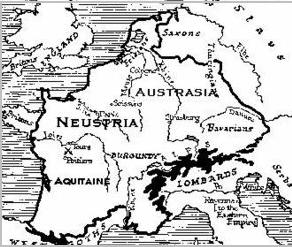
| Above: Charles Martel; The kingdom of Austrasia; Franconia today, right |