| The Last Margrave of Ansbach The Wild Margrave. The last Margrave of Ansbach. Elizabeth Craven Hessians: The Ansbach-Bayreuth Army in USA, Deserters: Names |
| The Frankonian Colonies in Michigan Die fränkischen Colonien des Saginaw Thales im Staate Michigan Wilhelm Loehe. Frankenmuth. Frankentrost. Early settlers: Names |
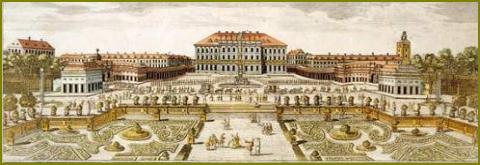
| Many exiled Salzburgers did not emigrate to East Prussia, America or Holland, but instead followed the path of earlier banished Protestants and wandered into nearby Protestant areas in Germany. As mentioned elsewhere, Friedrichstadt, Glückstadt, Herrnhut, Johanngeorgenstadt, Karlshafen, Klingenthal im Vogtland, Markneukirchen, Neu-Isenburg, Babelsberg and Potsdam are some of the German regions where the Exulanten fled to, and usually substantially contributed to the regional prosperity. An example are the musical instrument makers in Vogtland and Bohemia and wooden toy makers in areas such as Johanngeorgenstadt. A strong early Exulanten state occupied the Rhineland city of Neuwied. Devastated by the Thirty Years War, in 1662 a new municipal law guaranteed numerous liberties, above all, Freedom of religion, beginning a tradition of religious tolerance. The Exulanten brought several new branches of industry and talents to Neuwied, which fostered an economical boom for the city. By the 18th century, there were seven religious communities in Neuwied at work making furniture and clocks or working in metallurgy or in mills. A huge number of Exulanten, however, relocated to Frankonia (Franken), where they could enjoy the same general occupations as they once had and even meet up with some old neighbors. In old Frankonian church books, they are called "Landler" and designated as people from "over the Enns". In many places of upper and middle Frankonia (Mittelfranken), they grew to constitute 25% and 50% of the population. However, to reach Franken, the exiles had to travel through Catholic Bavaria, and some experienced indescribable misery because they were regarded there as rebels and heretics. After several protests to the Archbishop, he devised a "passport" so that the exiles could at least have safe passage at the border: WHEREAS the Bearer of this, who professeth the Protestant Religion, ---by Name, Servant at ---- in the County of ----, is obliged to go out of these Archiepiscopal Dominions, and leave the Country, the Magistrate is ready to assist him for that Purpose, and give him a well-attested Certificate of his Birth, Pedigree, and Apology: and therefore I, as lawful Magistrate, do testify accordingly, that the said ---- is born of honest Parents, viz. of ------, Farmer at -----, and ------ his Wife; and that he behaved himself, to the best of my Knowledge, in his Service with a Farmer, honestly and faithfully; but that he is obliged, upon the Account of having forsaken the Roman Catholick Religion, which alone is exercised and suffered in these Dominions, to go out of them, and leave. Wherever they went, it was an adjustment from their old life. One quarter of the exiles died within one year of leaving their homes. Those who made it to Frankonia were treated well and able to quickly assimilate as their cultures were similar. Middle Franconia, or Mittelfranken, is a hilly region with meandering streams and rivers in what is today Bavaria. Its more important cultural centers include Ansbach, Nürnberg, Fürth and Erlangen, towns which gave refuge to many displaced Austrian Protestants and Salzburgers. Mittelfranken belonged to Nürnberg and to two Margraveships who had ruled Franconia for over 500 years. Frankish towns beckoned not only to displaced Salzburgers, but to other refugees. By 1686, the many persecuted French Huguenots who had come to the small city of Erlangen outnumbered the German residents 1,000 to 317. By 1750, the French had adopted the German language and culture as they gradually assimilated until, at the end of the 18th century, they were completely "German". Erlangen became a busy commercial center with a new university (image at the top of page). In 1792, after 500 years of the mighty Margraves' rule, the map of Franconia began to change when debt-ridden Margrave Karl Alexander of Ansbach, already unpopular for having sold local soldiers to England to be used as mercenaries in the war with America, sold his principality to Prussia. In 1805, Prussia in turn ceded Ansbach to France in exchange for Hanover. Napoleon elevated Bavaria to a Kingdom after dissolving the Holy Roman Empire in 1806, and Bavaria acquired Ansbach and later Bayreuth. Bavaria was formally granted all of its present day territory, including Franconia, at the Congress of Vienna in 1814-1815. The old Protestant towns of Franconia were thence incorporated into the Catholic Kingdom of Bavaria, much to the enduring resentment of much of its population. Dissatisfaction was strong in the early 19th century. Trade, marriage and land ownership laws were oppressive and Protestant Frankonia was given a back seat in political matters. Beginning in 1817, when crop failures met an apathetic governmental response, the Franconians were not happy with their lot. By the 1820's and 1830's, repression increased, and by 1833 the government decided to rid the Universities of Würzburg and Nürnberg of all suspected reformers among their faculties. In 1838, when an edict came down from the King requiring the soldiers to genuflect in certain parades, the mostly Protestant draftees from Upper and Middle Frankonia refused, and although the order was withdrawn it had created even harsher feelings. There was now ill will on virtually every social level. Franconians were feeling more and more like second class citizens. Then, cattle succumbed to a lung disease in 1844, potatoes rotted in 1845, a whole crop of potatoes and grain failed in 1846 and there was record cold in 1847. These were not good years, and when a newspaper blithely suggested folks simply eat frogs' legs instead of bread, people got hopping mad. The agitated times of the 1840's resulted in a number of official proclamations and notices being pasted up all over Franconia and carrying grave warnings to any potential revolutionaries. On behalf of the Bavarian king, the country court at Cadolzburg also put out several warnings pointing out that anyone who emigrated without permission would lose their citizenship and possessions or property, and his heirs would lose their rights to inherit the same. People emigrated anyway. The discontent in the Frankish towns and villages came to a climax in the first months of the year 1848 after the food shortages and also due to pent up public indignation regarding the relationship between Bavarian King Ludwig I and the Spanish dancer Lola Montez in Munich. By 1849, calm was generally restored, but people..especially young people..had fled in droves, eventually resulting in proclamations of amnesty and pardons. But by then it was too late. Simple farmers and honest villagers who, by simply desiring basic freedoms, were turned into criminals by the arrogant Bavarian crown, had found new homes elsewhere. Many young people from Franken emigrated together to the New World and formed communities there, such as the Franconian settlements in Michigan. |
| In Greater Depth |
| Salzburgers in Franken and Franks in America |

BACK
| THE SALZBURG EXILE: MITTELFRANKEN AND AMERICA |
GFF: Blatter fur Frankische Familienkunde; Band 27, 2004
'Osterreichische Exulanten in Franken und Schwaben' by Georg Rusam
'The History of Saginaw County, Michigan' by Michael Leeson 1881
'Osterreichische Exulanten in Franken und Schwaben' by Georg Rusam
'The History of Saginaw County, Michigan' by Michael Leeson 1881