| The Von Humboldt Brothers and Other Jungle Boys |
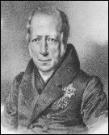
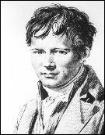
| The von Humboldt brothers were the sons of a Prussian officer in the army of Friedrich the Great, and a mother from Huguenot stock. Wilhelm von Humboldt, brilliant German philologist, man of letters and older brother of Alexander von Humboldt, was born at Potsdam, on June 22, 1767 and educated at Berlin, Jena and Göttingen, where he formed a deep friendship Schiller. His public career was distinguished, beginning with an appointment as the Prussian envoy to the papal court and next as the Minister of Public Instruction in Berlin. He married Fräulein von Dacherode and was sent as ambassador to Vienna in 1812 at the end of the French empire. He became the architect of the Prussian educational system and the founder of the University of Berlin and he served in a variety of other offices until 1819 when he devoted himself solely to literature and study. He published a translation of the Agamemnon of Aeschylus in 1816, and corrections and additions to Adelung's Mithridates in 1817, a collection of specimens of the various languages and dialects of the world. His work on the Basque language is the longest and most important. He was the first who brought Basque before the notice of European philologists. In 1828, he began another work on the ancient Kawi language of Java, interrupted by his death in 1835. Wilhelm Humboldt was a tireless and extraordinary person and a prolific writer, a brilliant statesman, an intense philosopher and a remarkable philologist. Humboldt made contributions to philosophy, history, literature, and linguistics. Humboldt University, formerly Friedrich Wilhelms Universität, was founded in Berlin in 1810 based on the concept of Wilhelm von Humboldt, who gave it the title "Mother of all modern universities." It lay in ruins after the brutal Allied bombings of Berlin in 1945. Friedrich Heinrich Alexander, Baron von Humboldt, the younger brother, was born September 14, 1769. He studied at the University of Frankfort-on-the-Oder and Göttingen, then studied anatomy and astronomy at Jena, commerce and foreign languages at Hamburg, and geology at Freiberg. In Freiberg in 1789, he made a scientific excursion up the Rhine and from it he produced a well known treatise in 1790. Von Humboldt also met George Forester, Captain James Cook's scientific illustrator from his second voyage, and they hiked around Europe. He then obtained an appointment at age 22 in the Mining Department of the Prussian government. He departed for the mountains in Ansbach-Bayreuth, which had recently come into the possession of Prussia. Here Humboldt supervising mining activities, invented a safety lamp and established, with his own funds, a technical school for young miners. He is best known as a naturalist and explorer who explored Central and South America from 1799 to 1805 with his friend, the French medical doctor/botanist Aime-Jacques-Alexandre Goujoud Bonpland. They departed from La Coruña, Spain, in June 1799, on a Spanish frigate, slipping past a British blockade in the dark of night, in a storm, and carrying Spanish government documents giving them complete freedom to explore, something rigorously denied any such travels by foreigners before. On June 9, 1802, Humboldt, Bonpland, a number of Indians, and the scientist Carlos Montufar who had joined the expedition set out to climb Chimborazo, the extinct, snow-capped volcano, elevation 20,561 feet, the highest mountain in Ecuador and then thought to be the highest mountain anywhere on Earth. Their Indian guides refused to complete the climb, and the rest of the party toughed it out alone. When they reached 19,286 feet, they had attained the top of the world at an altitude higher than anyone had ever been before. They also explored the coast of Venezuela, the Amazon and Orinoco Rivers, and much of Peru, Ecuador, Colombia and Mexico. Humboldt and Bonpland collected plant, animal, and mineral specimens, studied electricity, including discovering the first animal that produced electricity, Electrophorus electricus, the electric eel, did extensive mapping of northern South America, climbed mountains, setting set altitude records, observed astronomical phenomena, and performed many scientific observations. Humboldt discovered what is now called the Humboldt Current off the west coast of South America. They identified hundreds of new species, witnessed a total eclipse, an earthquake and spectacular meteor showers while traveling an estimated 6,443 miles through one of the most difficult and little-known places on Earth. They got typhoid fever, battled altitude sickness and encountered unfriendly tribes. They brought back well over a thousand illustrations and maps. Humboldt was the first European to witness native South Americans preparing poison arrows from a vine, the first to recognize the need to preserve the cinchona plant with its quinine containing bark used to cure malaria, the first to make accurate drawings of Inca ruins in South America and the first to discover the importance of guano as excellent fertilizer. Humboldt and Bonpland discovered and mapped canals, waterways and mountains, and after their South American expeditions, Humboldt and Bonpland were guests of President Thomas Jefferson for three months in 1804. He was said to have surprised the Americans when he talked at a double speed and would shift suddenly from English, which he spoke superbly, into French or Spanish or German, seemingly unaware of what he was doing, but never hesitating for a word. Von Humboldt wrote thirty volumes about his field studies, inspiring Charles Darwin. During his expeditions in the Americas and Europe, he recorded and reported on magnetic declination. He lived in France for 23 years and returned to Berlin in 1827 as the King of Prussia's advisor. Alexander was later invited to Russia by the Tsar and explored the nation, describing discoveries such as permafrost. Von Humboldt developed the principle of continentality, and also developed the first isotherm map, containing lines of equal average temperatures. From 1827 to 1828, he gave popular public lectures in Berlin. His brother Wilhelm had expired in his arms on April 8, 1836. His last work was his 'Kosmos', an enormous set of volumes written over a 21 year span which tried to unify all of science. The first two volumes of the Kosmos were published in his seventy-sixth year! By 1851, eighty thousand copies had been sold, popularizing natural science. Humboldt, a naturalist, an astronomer, a geographer, a geologist, a botanist, an authority on Indian antiquities, a linguist, an artist, an "academy unto himself," as Goethe would say, died at age 90 in 1859. His remains, prior to being interred in the family resting-place, were conveyed in state through the streets of Berlin where he was greatly honored. He never married, and left everything he had to a faithful servant. |
| Lesser Known among Jungle Boys |
| The Humboldts were not the only Germans with a fascination for the undiscovered. Theodore Koch-Grunberg, born in 1872, was an ethnologist and professor at the University of Freiburg and director of the state museum in Stuttgart. He led numerous expeditions into the little-known Northwest Amazon. With the assistance of photographer George Huebner, his work chronicled the lives and cultures of the indigenous peoples of Brazil’s Northwest Amazon, including the first accurate series of botanical photographs ever taken in the Amazon. Collections made from these expeditions were sent back to patrons in Berlin. Theodore Koch-Grünberg wrote "Zwei Jahre unter den Indianern: reisen in Nordwest-Brasilien" "Two years among the Indians" from 1903 to 1905. He described the culture of some Brazilian and Venezuelan Indian groups and their environment on the border area between Brazil and Venezuela. He published a five-volume work on this expedition. He was accompanied by Indians in his exploration and entered Venezuela via Manao and continued his journey, writing all of his observations in minuted detail. Grunberg’s final expedition was to chart the headwaters of the Branco River between Brazil and Venezuela and seek links between the Negro and Orinoco River systems, and he died during this trip of malaria on October 8, 1924. Koch-Grünberg's rare Berlin ethnographic collections and Huebner's unique photographs in Dresden were one of the casualties of indiscriminate Allied bombing, and among the rare, early scientific illustrations and specimens which can never be duplicated or replaced. |