| When approximately 6,000 German Army officers were released by the Western Allies in the first half of 1945, they were then re-arrested by the Soviets and held in Zone II at Sachsenhausen Prison Camp which had formerly held the Communist political prisoners of the NS. Later, Special Camp No. 7 was filled with German prisoners who had been sentenced by a Soviet military tribunal to 15 years of hard labor. By the end of 1945, it held 12,000 to 16,000 prisoners, among them 2,000 female prisoners, but the population grew by epic proportions. There was inadequate food and deplorable sanitary conditions. Prisoners could have no clothing other than what they were wearing when arrested. Disease and epidemics ran through the barracks where the prisoners had to sleep on the bare wood frames with only a block of wood for a pillow for two years until blankets and bags of straw were finally distributed in 1947. They were not allowed any activities, and even singing was prohibited. The windows of the overcrowded barracks were blacked out and the prisoners were kept in almost total darkness. A total of approximately 60,000 German prisoners were held in Special Camp No. 7 after World War II ended, and 12,000 were buried in unmarked mass graves. None were released by the Soviets until 1948, and most prisoners remained there until 1950, and some were sent on to the Soviet gulags or handed over to the East German Communist government for even more punishment. In eleven Soviet camps set up within the GDR such as Muehlberg, Saxonia or Oranienburg, many thousands also lost their lives. Between 1945 and 1950 there were 122,671 interned, from which 42,889 died of diseases and 756 were executed. However in Muehlberg at 7,000 to 9,000 out of 22,000 perished painfully from hunger, malnutrition and epidemics and were then thrown into mass graves. Prisoners here as young as fifteen were completely isolated and not allowed to write or receive any letters. Most were kept for years without ever knowing why they were arrested, since in those camps there were no prominent national socialists. There were eleven silent or secret camps as well "Five Oaks" at New Brandenburg where about 6500 prisoners died. Established in April, 1945, near the village of Ketschendorf in Furstenwalde south-east of Berlin, the Soviet occupation forces ran a camp named 'Special Camp Number 5'. which housed internees. At first the prisoners were primarily members NS and members of the SS. But then the Soviets began including many German teenage who were arrested without reason or kidnapped, taken away by the Russian military forces and simply "disappeared". Months later, in November, 1945, there were still 9,395 persons interned in Camp Ketschendorf. During this time it is believed that over 5,000 internees died due to the catastrophic conditions under which they were forced to live. During 1952 and 1953 many mass graves were discovered. Around 4,500 bodies were exhumed and reburied in a mass grave at Halbe. Another camp 'Special Camp Number 2' was set up in the former concentration camp at Buchenwald which held 28,000 internees, 7,000 of whom died from neglect and hunger. These camps were unknown to the outside world until years after the war. |
| "Special" Camps |
| Concentration Camps In the East And Soviet Gulags |
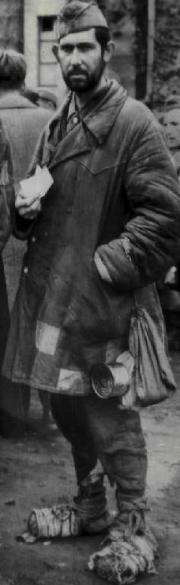
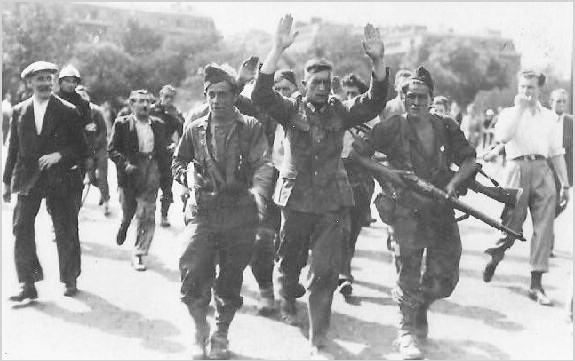
| In the communist realms, the conditions that German POWs, many just kids, endured on the Eastern Front were beyond grim and did not follow any accepted protocol for treatment of captured soldiers. Under the provisions of the Yalta Agreement, the U.S. and U.K. had agreed to the use of German POWs in the Soviet Gulag as "reparations-in-kind", but comparatively few Germans were taken alive before Stalingrad. Most were shot and many were mutilated alive. Out of the 90,000 Germans who marched into Soviet captivity at Stalingrad, only 5,000 ever returned: 40,000 did not survive the march to the Beketovka camp, where another 42,000 perished of hunger and disease. Those POWs that made it alive to separate camps in Siberia and elsewhere in the western Soviet Union were forced into slave labor and endured frequent beatings, brutal torture, poisoning and execution. Thousands more captured soldiers were executed on the spot and thrown into mass graves. Food and water were always scarce, living barely primitive. The result was an unacceptable rate of death. The gulag's daily food ration was padded with 400 to 800 grams of bread, more than half of the prisoner's daily 1200-1300 calories. The most productive workers received a modest food bonus (ironically, the Morgenthau Plan for occupied Germany suggested the same allotment of 1300 calories a day per German, while the suggested minimum requirements for heavy labor are from 3100-4000 calories per day). In the gulags, the prisoner's food ration was linked to his production. Realizing that the most productive work done by prisoners is in the first three months of captivity, after which they were too debilitated to perform well, the exhausted prisoners were simply killed off and replaced with fresh blood, ensuring a constant flow of new labor. Because the German POWs had been conveniently redefined as "disarmed enemy forces", Allied captors did whatever they wanted with their German captives and even bartered them away to others for use as slaves. In fact, in a "Re-education" bulletin distributed by the "Special Service Division, Army Service Forces" of the U.S.Army in 1945, tacit approval is given for the intentional transfer of German POWs from Allied hands to the genocidal Red Army ala Morgenthau's genocidal plan: “Many German prisoners will remain in Russia after the end of war, not voluntarily, but because the Russians need them as workers. That is not only perfectly legal, but also prevents the danger of the returning prisoners of war becoming the core of a new national movement. If we ourselves do not want to keep the German prisoners after the war, we should send them nonetheless to Russia." Long columns of German prisoners were marched on foot hundreds of tortuous miles toward their doom in Stalingrad, Kiev, Kharkov, Moscow and Minsk where most were starved and worked to death. Very few ever saw home again. Although it was always strongly denied, Morgenthau himself said his plan was implemented. In the New York Post for Nov. 24, 1947, he wrote, "The Morgenthau Plan for Germany... became part of the Potsdam Agreement, a solemn declaration of policy and undertaking for action.... signed by the United States of America, Great Britain and the Union of Soviet Socialist Republics." The fates of thousands upon thousands of German soldiers, many just kids, surrendered to both the Allies and especially the Soviets have never been accounted for and any attempts to uncover the truth of their disappearance have been halted. Between 1941 and 1952, millions of German POWs died in the Gulag. The last surviving 10,000 of them were not released from the Soviet Union until 1955, after a decade of forced labor. About 1.5 million German soldiers are still listed as missing in action and join the ranks of those who vanished while under Soviet captivity. The Red Terror was let loose on surrendered German POWs in eastern Europe from Czechoslovakia to Poland and beyond. Many were simply shot and thrown into mass graves, others were tortured and mutilated first, and these retributions extended even to young boys. German POWs who fell into the hands of the Yugoslav hordes suffered horrible fates. After 1986, a report appeared showing that out of about 194,000 prisoners, up to 100,000 died from gruesome torture, murder, horrible conditions, disease and intentional starvation. Around 93,000 ethnic Germans who lived in the Danube basin from 1939 to 1941 served in Hungarian, Croatian and Romanian armies, and they remained citizens of those countries during the war (many of these ethnic Germans served in the “Prinz Eugen” Waffen SS division of about 10,000, which automatically gave them German citizenship). 26,000 of these soldiers died, over half after the end of the war in Yugoslav camps. When most of the “Prinz Eugen” division surrendered after May 8, 1945, over 1,700 of them were murdered in a village near the Croat-Slovenian border and the other half was worked to death in Yugoslav zinc mines near the town of Bor, in Serbia. Aside from these Danube German soldiers, over 70,000 Germans who had served in regular Wehrmacht died in Yugoslav captivity from revenge murders or as slave laborers in dangerous work. These were mostly troops of “Army Group E” who surrendered to British in southern Austria on May 8, 1945 only to have the British turn about 150,000 of them over to vengeance fueled Communist Yugoslav partisans who dealt with them brutally. The fates of the remaining captured German troops in Yugoslavia was murder, both fast and slow. First, up to 10,000 died in Communist-organized “atonement marches” (Suhnemärsche) which stretched 800 miles from the southern border of Austria to the northern border of Greece. In most instances, the prisoners were all tied together and forced to walk barefoot with no food or water. As some dropped off one by one on these death marches, others were executed or tied together in smaller groups and thrown into rivers where they were all shot for sport and drowned. On November 1, 1944, the Council for the Liberation of Yugoslavia declared all Germans "open prey" and less than half of the German POWs and ethnic German civilians survived the partisans' genocide during this time. Then, later in the summer of 1945, many more German POWs were murdered in mass executions or thrown alive into large karst pits along the Dalmatian coast of Croatia. For the next 10 years, from 1945 to 1955, as was the case in the Soviet Union and other communist countries, 50,000 more German prisoners died from being worked to death as slaves and from the results of disease, starvation or exhaustion. Thousands of German and Croat soldiers captured in the final days of the War were coldly executed and buried in mass graves found in western Croatia. As of October 2007, 540 secret mass graves had been registered across Slovenia, believed to be holding up to 100,000 bodies. Since that time, many more have been unearthed. A site recently uncovered at Harmica, 50 kilometres north-west of Zagreb, holds the bodies of 4,500 soldiers, including 450 German officers, executed by the communist partisans. The bones were found in six separate caves and laid in trenches upon discovery. The victims were troops of the 392 Infantry Division, set up by the German command in Croatia in August 1943 led by Lt. General Hans Mickl. In other caves, POWs were herded in and were gassed to death after the entrances were sealed. In previous discoveries of mass graves of both civilians and military, the remains wore no clothing and had been mutilated, burned, beaten, dismembered or suffered other atrocities. In 2009, "hundreds" of mummified corpses shot by Tito’s Partisans were found near Lasko in Slovenia. Croatia's Interior Minister said there could be as many as 840 mass graves in Croatia alone and estimated another 600 in neighbouring Slovenia and around 90 in Bosnia-Herzegovina. |
| The Hermann Helfta POW camp near Eisleben |
| Eisleben, Saxony (Lutherstadt Eisleben) is one of the oldest towns between the Harz mountains and the river Elbe. Here, Martin Luther was born and died. Eisleben was first officially recorded in 994 AD and was granted a town charter in the 12th century. The town grew in importance in the 15th and 16th centuries, mainly due to the copper mining and smelting industry in the territories of the once powerful Counts of Mansfeld. The district of Neustadt, a settlement for miners where St. Anne's Church and the adjacent Augustinian Friars' monastery are located, was established in the town's heyday. As the local curate, Martin Luther often used to stay there. The Cistercian convent of St Mary of Helfta is located outside Eisleben. It was founded in 1229 below Mansfeld Castle and in 1258 the nuns moved to Helfta. It went on to become a major European religious and cultural center. Three women represent the influence of the convent on German mysticism and literature in the 13th century: Getrud the Great, Mechthild of Magdeburg and Mechthild of Hackeborn. Eisleben, a city with about 24,000 inhabitants in 1945, was attacked with artillery fire and low-flying attacks, and while no major physical damage was caused to the city itself, surrounding mining and industrial enterprises were greatly impacted. Three firefighters and fourteen people were killed in the shelling of the town. By the end, in April 1945, every major school, several restaurants and the city hospital was being used as a hospital for casualties from the surrounding area. The Americans took control of the city, which surrendered without a fight after futile resistance from some young boys and old men. All privately owned weapons, binoculars, cameras, radios had to be delivered and all citizens had to undergo a registration. In addition, a curfew was imposed. A large wave of arrests by American military police against office-holders of the Third Reich followed. The Americans set up a "refugee camp" to keep their many prisoners of war as well as to detain certain civilians on the north and east side of the mine shaft at the Hermann Helfta, but it was not a "real" camp. It was rather a field hastily fenced with barbed wire without any barracks or housing. The prisoners had to sleep on the bare ground and there was hardly any food. Water was provided only once a day from a toxic former agricultural water truck which had carried pesticides. Numerous ex-inmates testified that while bread was being sent to them, the US guards let it mold outside of the fences in view of the starving inmates. They describe having to sleep in the open under pouring rain and in storms, with their mouths open trying to get drops of fluid, of some people having barely any clothing to cover themselves and of the rampant physical abuse and torment they endured. Below: former site of the "camp". The hygienic conditions were as miserable as the water supply. Prisoners began dropping like flies, but anyone attempting an attempt to escape was immediately shot. The number of prisoners was increasing and conditions became more unbearable. There was almost no space left available for a prisoner to lie down. When a couple of prisoners complained at last, a group of them was herded onto a truck by the Americans and taken to the liberated Buchenwald concentration camp near Weimar to see the "atrocity exhibits" which had been recently been polished up by the Americans for use as learning tools for their German "re-education" policy. On their return, the prisoners had to describe the scene and recite alleged German atrocities to their fellow prisoners in the Helfta camp who were gathered together for the "show". Thus, each protest was suppressed at once. By the end of May, it became increasingly difficult to manage Helfta and it was disbanded, with some of the prisoners were moved by trucks to Naumburg on the Saale. By then, 80,000 to 90,000 prisoners had been interned in Helfta (a number now being "downsized" by "modern historians" to a mere 22,000). The death toll in any case is considered to be somewhere between 2,000 and 3,000. After the Americans handed over the entire area to the communists as previously agreed, the subject was officially taboo to speak of, and this was the policy of the former German Democratic Republic. Since reunification, a monumental stone has finally been erected to the immense suffering of the inmates of the POW camp Helfta, donated by former German prisoners of war and the Folk Society Helfta. Much of the former camp was divided into small land parcels with homes built over another part. Not a single reference exists to this wretched piece of German history exists today. |
| Some German POWs returned home after eight or more years in captivity as penniless, homeless old men and receiving charity to live, as Henry Morganthau desired, "as a dog is dependent on its master" for survival. |
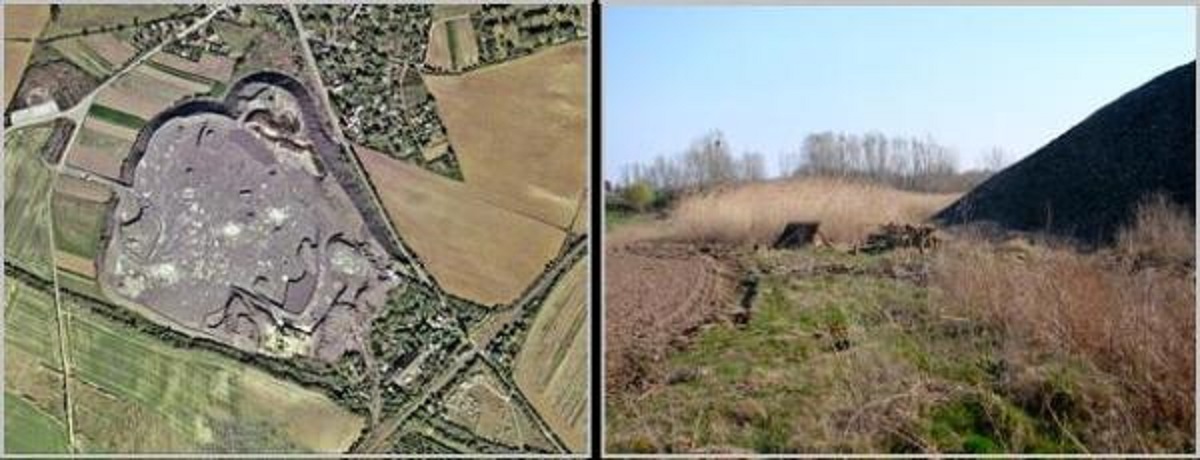
Site of Former camp (click)
Site of Former camp
Site of Former camp