| Henry Ford's Peace Ship |
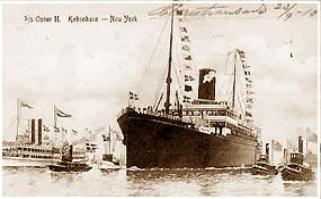
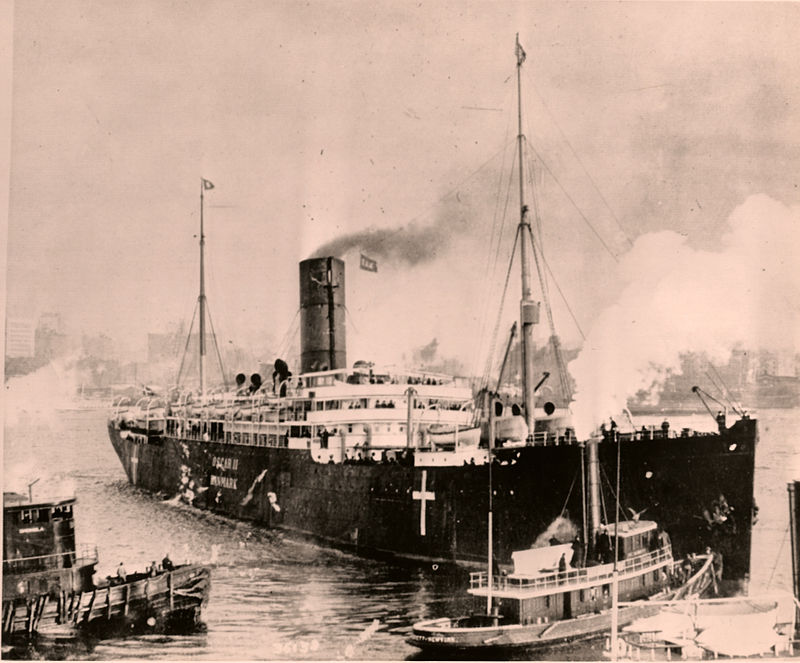
| Ford came up with the idea of sending a boat loaded with himself and 170 prominent pacifists on a peace ship to Europe where war was raging to see if they could negotiate an agreement that would end the war. Ford invited President Wilson and other important political figures, but the mission not only received no government approval or support, the project drew almost immediate ridicule, with one State Department official calling it a “bloody nuisance” and Wilson chuckling about the whole idea. Disappointed in Wilson, Ford shook his head and stated, “He’s a small man.” The lone state governor to accept Ford’s invitation to attend was North Dakota Governor Louis Hanna. An interview with Ford was page one news for New York papers and others, but from the beginning it was announced with sarcastic headlines such as the Tribune's: GREAT WAR ENDS CHRISTMAS DAY. FORD TO STOP IT. The New York Herald termed it “one of the cruelest jokes of the century.” British papers were even more bitter and mocked the event mercilessly. An article G. K. Chesterton (already working in the secretive British War Propaganda Bureau) referred to Ford in the December 12, 1916, issue of Illustrated London News as "the celebrated American comedian." The ship Oskar II sailed on its noble mission from Hoboken, New Jersey on December 4, 1915. Wilson’s message to Congress three days later would be a plea for preparedness and an increase in the standing army, while on that same night, Ford sent wires to members of Congress urging them “to give the peace mission your support and encouragement so that it may succeed at the earliest possible moment” and the following day he radioed messages to a number of rulers, begging for peace: “Enough blood has been shed, enough agony endured, enough destruction wrought” and asking them to declare a truce by “mediation and discussion”. The peace ship was met with one setback after another. It was seized by the British Navy and detained at Kirkwall for more than twenty four hours, supposedly due to the fact that part of the ship's cargo carried (prunes) was considered contraband, although it was not. The ship eventually reached Stockholm in January, 1916 for a conference with representatives from Denmark, Holland, Norway, Sweden and the USA. Unable to persuade representatives from the warring nations to take part, the conference was unable to negotiate an Armistice. The Ford Peace Ship enterprise ultimately failed and did not accomplish its goals. His group went to neutral Sweden and the Netherlands to meet with peace activists there. Three weeks into the voyage, a disillusioned Ford abandoned the group in Oslo, Norway, finally taking the advice of his associates who had been repeatedly urging him to consider his reputation and return to the US. Ford feigned illness and took a ship back to New York. |
click
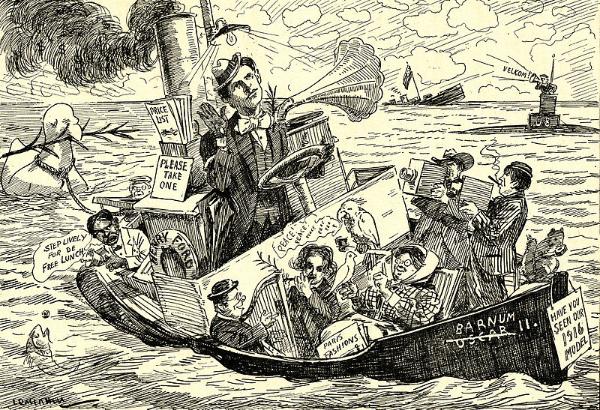
| British "humour" English: "The Tug of Peace" Punch December 15, 1915 Source: Punch or the London Charivari |
| A History of the Blockade of Germany and of the countries associated with her in the Great War: Austria-Hungary, Bulgaria and Turkey. (More Sources) |
| The Blockade and Attempted Starvation of Germany (wintersonnenwende) |
| The Blockade and Attempted Starvation of Germany (Exulanten) |